gpu shortages hit nvidia's rtx 50 series, prices soar
Santa Clara, Wednesday, 22 January 2025.
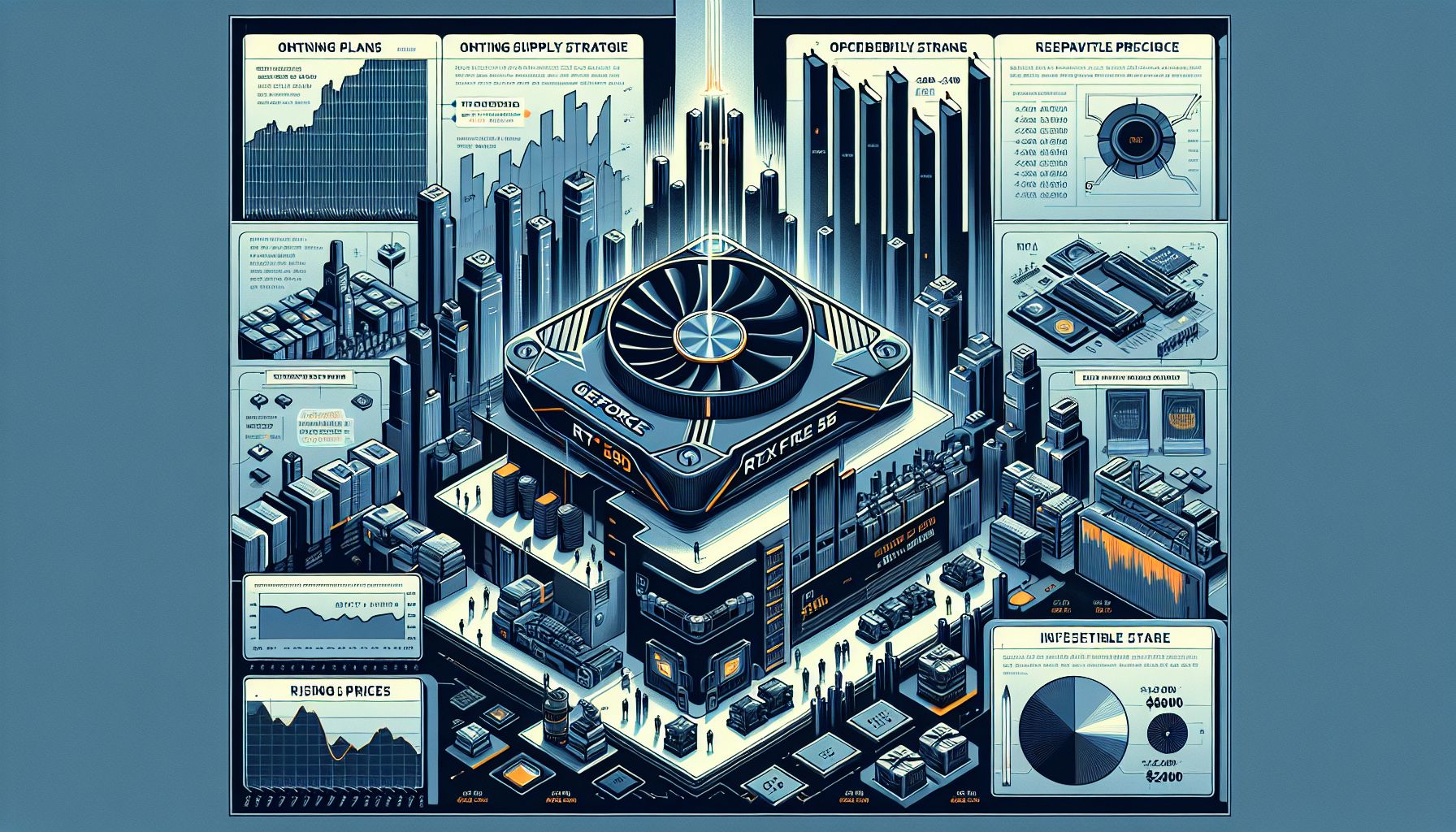
NVIDIA’s GeForce RTX 50 Series GPUs, set for release on 30 January 2025, are already troubled by severe supply shortages and skyrocketing prices. The shortage is particularly impacting the RTX 5090 and RTX 5080 models, with prices in some regions, especially China, reaching double their anticipated retail price. Currently, the RTX 5090 and RTX 5080 could be priced as high as $4000 and $2000, respectively. Factors contributing to the shortages include communication issues with board partners and the upcoming Chinese New Year. Despite these challenges, NVIDIA’s plans to launch both models remain unchanged. The supply strain could potentially last until the second quarter of 2025, affecting consumer availability worldwide. Major AIBs like ASUS and MSI are poised to benefit from this pricing surge. These dynamics are reshaping NVIDIA’s market approach and pose operational challenges during the launch.
Supply chain disruptions and communication issues
The shortage stems from miscommunications between NVIDIA and its board partners [1], creating significant supply constraints just days before the scheduled January 30 launch [1][2]. In North America, retailers report receiving only 20 RTX 5080 units and zero RTX 5090 units for January [2]. The situation is particularly severe in China, where prices have already doubled, with the RTX 5090 reaching $4,000 and the RTX 5080 hitting $2,000 [1][2].
Technical specifications and market positioning
The RTX 5090 showcases impressive specifications, featuring the new Blackwell architecture with 21,760 CUDA cores, 32 GB GDDR7 memory, and 28 Gbps memory speed [3]. The card’s total bandwidth reaches 1,792 GB/s with a power consumption of 600W, marking a 150W increase from its predecessor [3]. These specifications position the RTX 5090 as NVIDIA’s flagship product, despite the supply challenges.
Production and distribution strategies
NVIDIA has implemented a strategic approach to manage the limited supply, prioritizing research institutions and testers for initial distribution [3]. The company has shifted production from Hong Kong to Singapore, while BaNeng Group establishes new production lines in Indonesia [3]. Industry experts predict supply constraints could persist until Q2 2025 [1], significantly impacting global availability and pricing structures.