u.s. and china call 90-day tariff truce: will it last?
Washington, Monday, 12 May 2025.
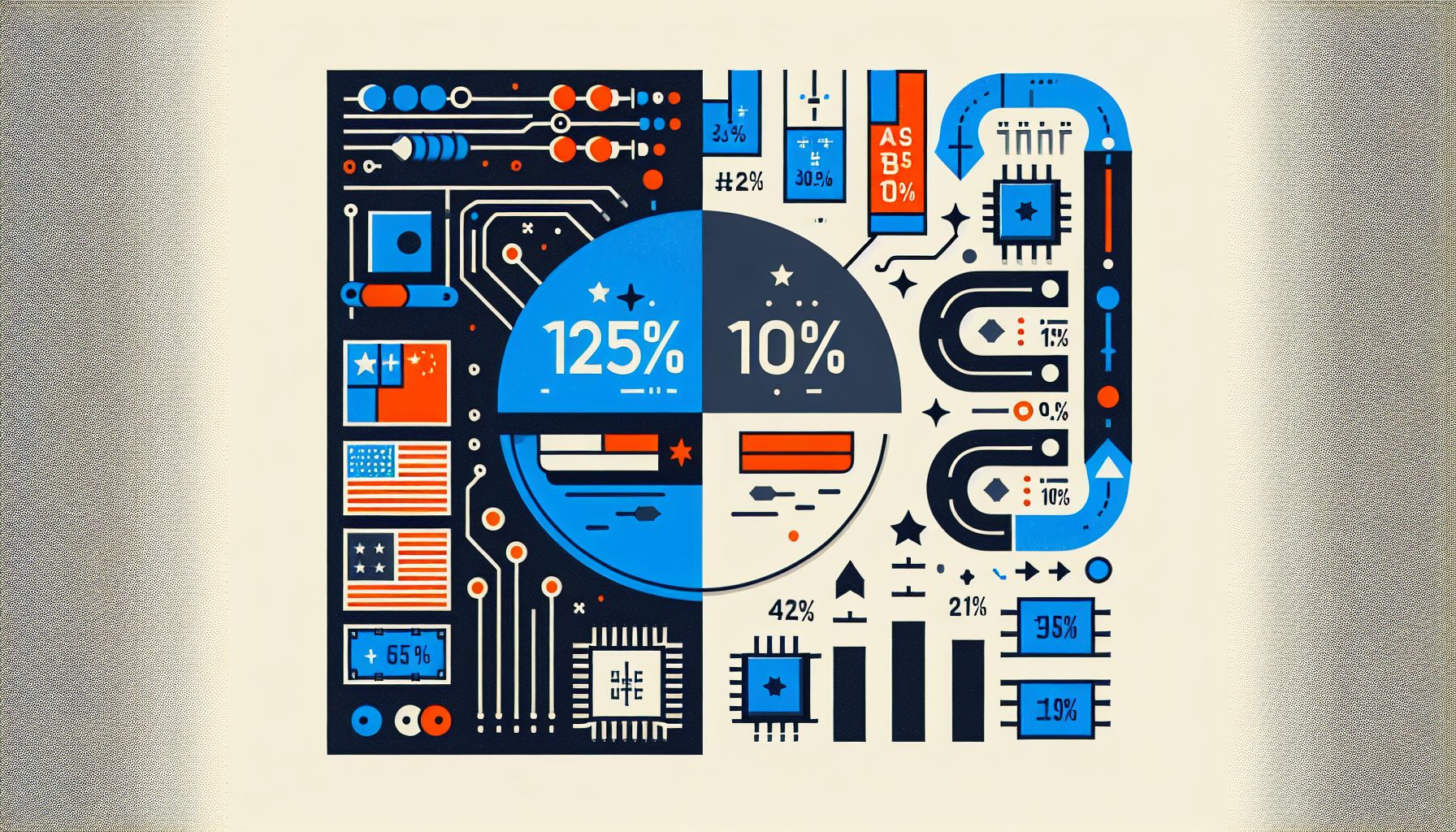
The U.S. and China have agreed to a 90-day suspension of increased tariffs, signaling a cooling of trade tensions. Tariffs will be reduced from 125% to 10% for both countries. This pause offers relief to semiconductor companies, however, a 20% duty on Chinese imports related to fentanyl remains. Stock markets have reacted positively to the news. Experts remain cautiously optimistic, pointing out that the U.S. still maintains higher tariffs on China than other nations. The coming months will reveal if this truce leads to lasting trade peace.
tariff reductions and market impact
The agreement, reached on May 12, 2025, involves reducing reciprocal tariffs from 125% to 10% [1]. This substantial reduction, a 115, is expected to alleviate the economic strain on both nations [2]. The United States will maintain a 20% duty on Chinese imports related to fentanyl, resulting in a total tariff of 30% on those goods [1]. Following the announcement, market indices responded positively, with Nasdaq futures rising by 3.7%, S&P 500 futures increasing by 2.7%, and the Dow Jones Industrial Average gaining over 840 points, a 2% increase [1].
expert opinions and economic implications
Experts suggest the tariff reduction reflects a mutual recognition of the adverse effects of tariffs on global growth [1]. Tai Hui, APAC chief market strategist at J.P. Morgan Asset Management, noted that negotiation is a preferable alternative [1]. Zhang Zhiwei, chief economist of Pinpoint Asset Management, stated the tariff agreement exceeded expectations [3]. Chris Pang, founder and CEO of GenPark, anticipates reduced cost pressures for exporters [3]. The ICE U.S. Dollar Index increased by 1.1% to 101.46, while Brent crude futures rose by 2.7% to $65.66 a barrel [1].
details of the agreement
U.S. Treasury Secretary Scott Bessent stated that both sides would reduce reciprocal tariffs by 115% [1]. The agreement, set to begin on May 14, 2025, will last for 90 days [1]. China will also suspend or cancel non-tariff countermeasures against the U.S., potentially including the export ban on rare earth products [3]. The U.S. will reduce tariffs on Chinese electronics and textiles, while China will reduce tariffs on U.S. agricultural products [3]. Further discussions regarding intellectual property rights are planned for the third quarter of 2025 [3].
persisting concerns and future negotiations
Despite the agreed tariff reductions, Mark Williams, chief Asia economist at Capital Economics, cautioned that the U.S. still maintains higher tariffs on China compared to other countries [1]. Williams also noted the U.S. appears to be rallying other countries to introduce trade restrictions against China [1]. He added there is no guarantee the 90-day truce will result in a lasting ceasefire [1]. The agreement establishes a mechanism for continued consultation on economic and trade relations [5]. Negotiations can occur in China, the U.S., or a mutually agreed third country [5].
Bronnen
- www.cnbc.com
- www.nikkei.com
- www.bbc.com
- cn.nytimes.com
- www.bbc.com
- cn.nytimes.com
- www.dw.com
- www.xinhuanet.com