China's Green Push: Addressing Trade Barriers on the Path to Carbon Neutrality
Beijing, Monday, 10 March 2025.
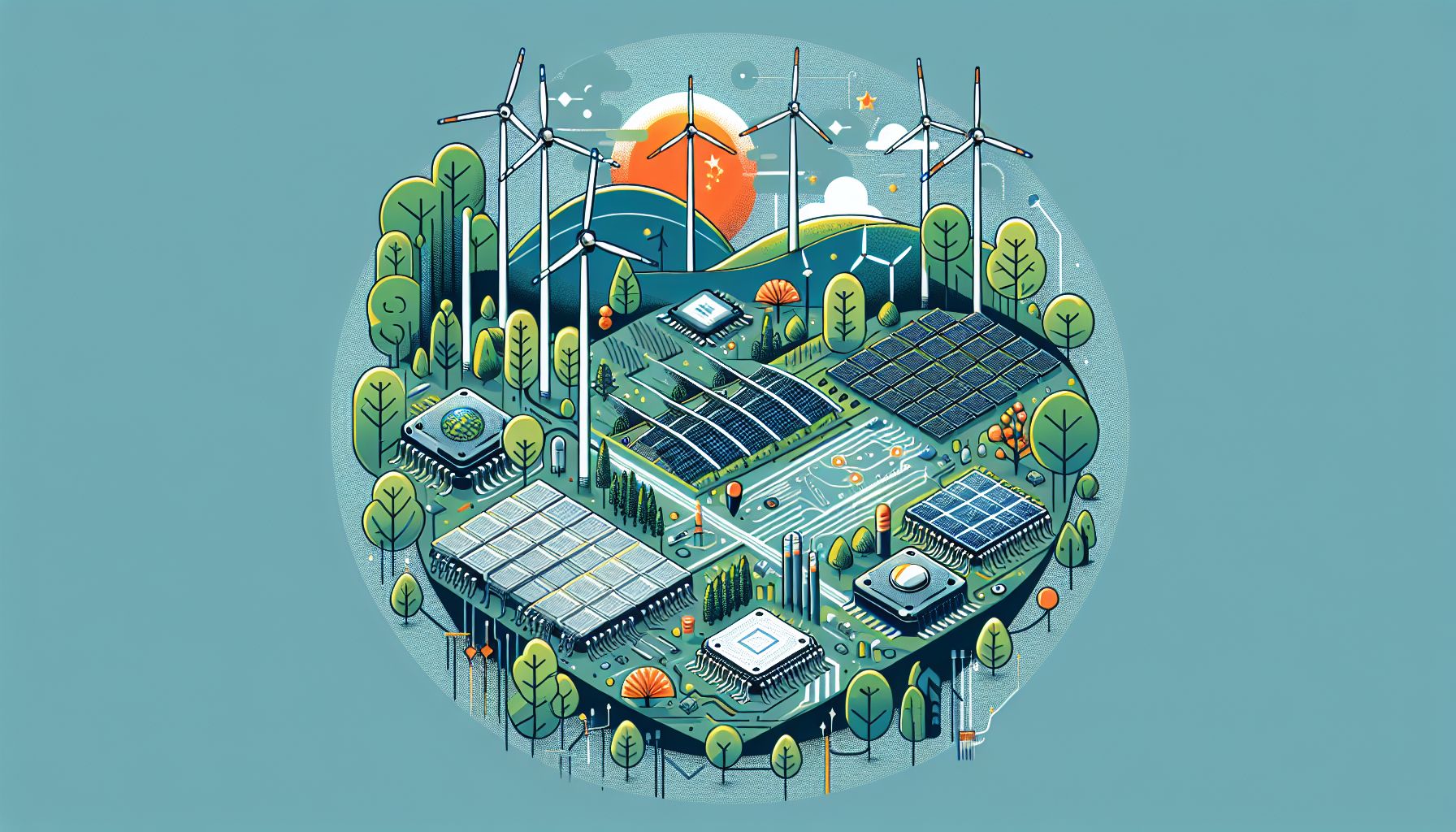
China is tackling green trade barriers head-on. A key plan involves national guidelines for calculating product carbon footprints to align with international standards by 2027. This initiative aims for carbon neutrality before 2060. It could significantly impact international trade, especially in sectors like semiconductor manufacturing. The country’s commitment involves expanding carbon emission trials and building zero-carbon industrial parks. China’s installed wind and solar power capacity exceeded 1.4 billion kilowatts last year, meeting targets six years early.
Government initiatives and carbon market expansion
China’s commitment to carbon neutrality includes the establishment of carbon labeling and certification systems [1][2]. The government work report mentioned ‘green’ 16 times in 2025, an increase from 14 times in 2024 14.286 ≈ 14.3% [3]. This highlights the increased focus on environmental issues. The China Certified Emission Reduction (CCER) market officially launched last year, creating a dual-drive carbon market [3]. By 2027, China aims to have carbon footprint management systems in place for approximately 100 key products [1][2]. These initiatives signal significant opportunities for companies involved in carbon reduction technologies and services [3].
ESG integration and opportunities for chinese firms
Experts suggest that addressing green trade barriers can upgrade domestic industries and propel them towards sustainability [1]. Chinese firms are encouraged to embrace environmental, social, and governance (ESG) practices to overcome trade barriers [3]. This includes strengthening supply chain management and promoting green supply chains [3]. Liu Lifeng, Chairman and CEO of Ipsos China, noted that the global focus on ESG offers excellent opportunities for Chinese companies going abroad [3]. Western societies welcome environmentally conscious companies [3]. Companies with strong ESG practices may see enhanced reputations and increased market access [3].
Green certifications and international recognition
National People’s Congress representative Liu Hanyuan suggested including green electricity certificates (GECs) in product carbon footprint calculations [7]. He also suggested establishing a sound, internationally recognized Chinese GEC system [7]. Some international markets link product carbon footprints to business performance [7]. France has set carbon footprint thresholds, significantly reducing the market share of Chinese photovoltaic components from 95% to 25% [7]. The EU is also considering similar regulations [7]. Therefore, international recognition of Chinese GECs is crucial for maintaining competitiveness and reducing costs for Chinese exporters [7].
Trade tensions and retaliatory measures
China is actively addressing trade barriers, as evidenced by retaliatory tariffs imposed on Canada [6]. This action sends a warning to other nations considering aligning trade policies too closely with the United States [6]. China’s Ministry of Commerce stated that Canada’s tariffs on Chinese electric vehicles and steel/aluminum products disrupted normal trade [6]. China imposed tariffs of 100% on Canadian canola oil, oilseed cake, and peas, and 25% on seafood and pork [6]. Such measures highlight the risks associated with trade disputes and the importance of diversifying markets [6].
Investment implications and strategic focus
Investors should monitor policy changes and adapt strategies to capitalize on opportunities in green technology and sustainable practices [1][3]. Companies demonstrating a commitment to ESG principles are likely to attract investment and perform well in the long term [3]. Sectors such as renewable energy, carbon capture, and green supply chain management are poised for growth [1]. Government support and increasing consumer demand for environmentally friendly products will further drive this trend [1][3]. Actively engaging in carbon emission reduction and adapting to international standards will be crucial for sustained success [2][7].
Bronnen
- www.chinadailyhk.com
- www.chinadaily.com.cn
- finance.sina.com.cn
- www.ce.cn
- news.qq.com
- www.zaobao.com.sg
- www.bjnews.com.cn
- hbj.wuhan.gov.cn