china's response to trade war: state intervention and market support
shanghai, Wednesday, 9 April 2025.
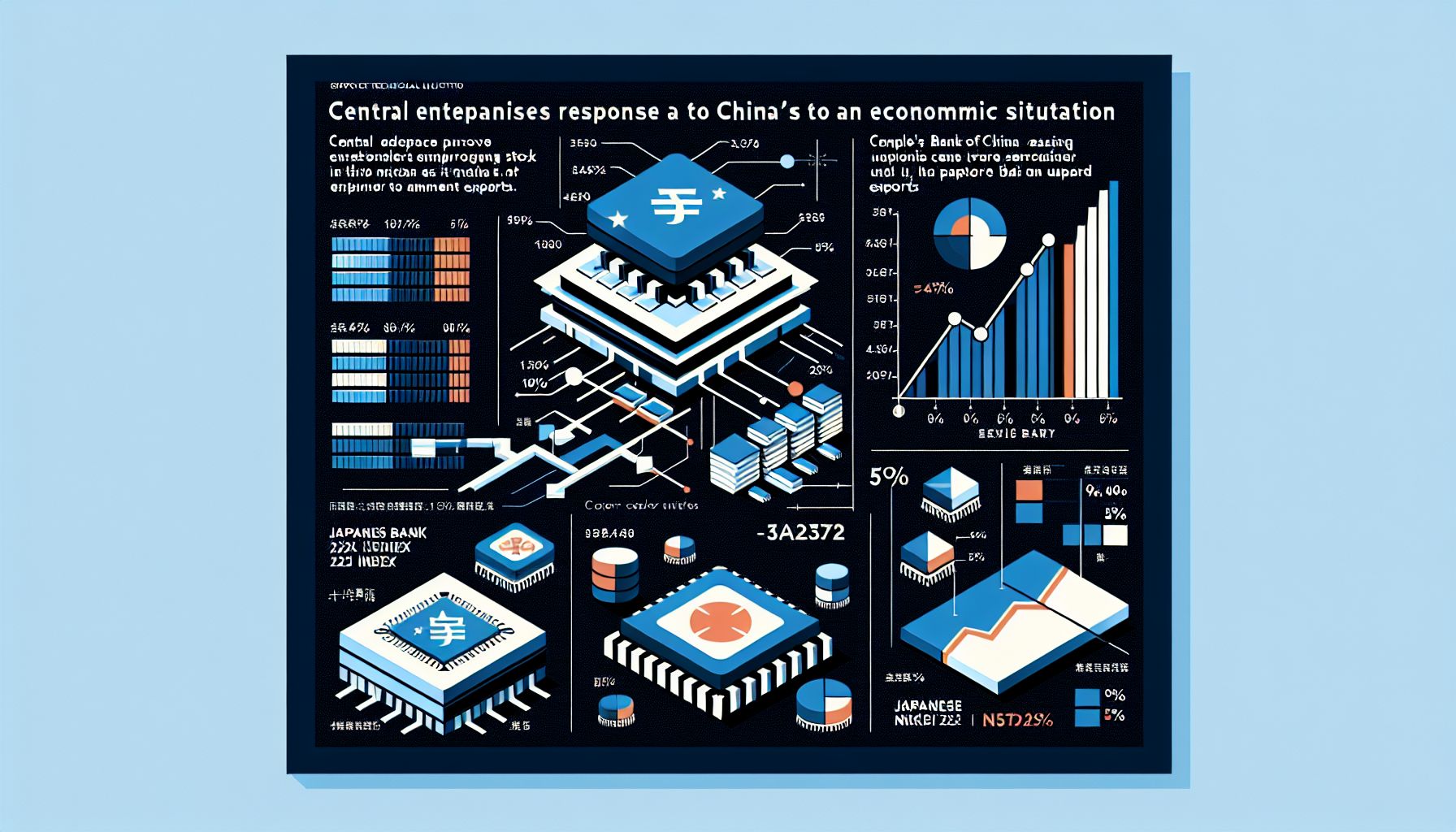
as trade tensions escalate, china is fighting back with market support measures. chinese central enterprises are buying up stocks to stabilize prices, particularly in the semiconductor sector. the people’s bank of china is loosening its grip on the yuan to boost exports. other countries are taking action as well, with japan’s nikkei 225 index increasing by 5%. will these measures be enough to counter the impact of escalating tariffs?
state-backed interventions
In response to escalating trade friction with the U.S., China has deployed state-linked funds to purchase assets and stabilize its market [1]. These funds, often referred to as the ‘national team,’ are strategically buying stocks to counter the impact of tariffs, particularly on companies in key sectors like semiconductors [1]. Simultaneously, the people’s bank of china (pboc) is allowing the yuan to weaken, a move designed to make chinese exports more competitive [1]. These actions reflect a coordinated effort by beijing to mitigate the economic fallout from increased trade tensions [1].
market reactions and investor sentiment
Following a significant downturn in asian markets, several countries have announced emergency measures to stabilize their economies [2]. Japan’s nikkei 225 index and tokyo stock price index (topix) both saw gains exceeding 5% [2]. In china, major state-owned entities, including central huijin, china reform holdings, and china national new energy, have collectively increased their holdings of chinese stock assets to maintain market stability [2]. These interventions boosted the a50 futures index, which closed up by 1.83% [2]. However, some analysts suggest that these measures may not fully offset the broader impact of the escalating trade war [5].
global responses and concerns
The instability in global markets has prompted various central banks to intervene [2][7]. The korean central bank announced it would closely monitor the market due to tariff uncertainties and take necessary measures to stabilize it [2]. Similarly, the indonesian central bank intervened in the offshore rupiah market to stabilize its currency [7]. These actions indicate a widespread concern among nations about the potential economic repercussions of the sino-american trade conflict [2][7]. Thailand’s stock exchange is also taking action and will temporarily stop the selling of stocks short [7].
mixed outlook and expert opinions
Despite intervention efforts, some experts remain cautious about the long-term effectiveness of these measures [5]. william xin, chairman of spring mountain investment management, noted that such support might be insufficient to counter the effects of a prolonged trade war, where businesses struggle with orders, pricing, and customer retention [5]. others suggest that while stimulus measures may offer short-term relief, the fundamental economic conditions will ultimately determine market performance [5]. The long-term success of these interventions remains uncertain [alert! ‘Market responses can be volatile and influenced by factors beyond state control.’]
Bronnen
- www.bloomberg.com
- stcn.com
- www.rfi.fr
- www.epochtimes.com
- www.cna.com.tw
- news.dayoo.com
- finance.eastmoney.com