us-china tensions shake up semiconductor supply chains
Washington D.C., Monday, 6 January 2025.
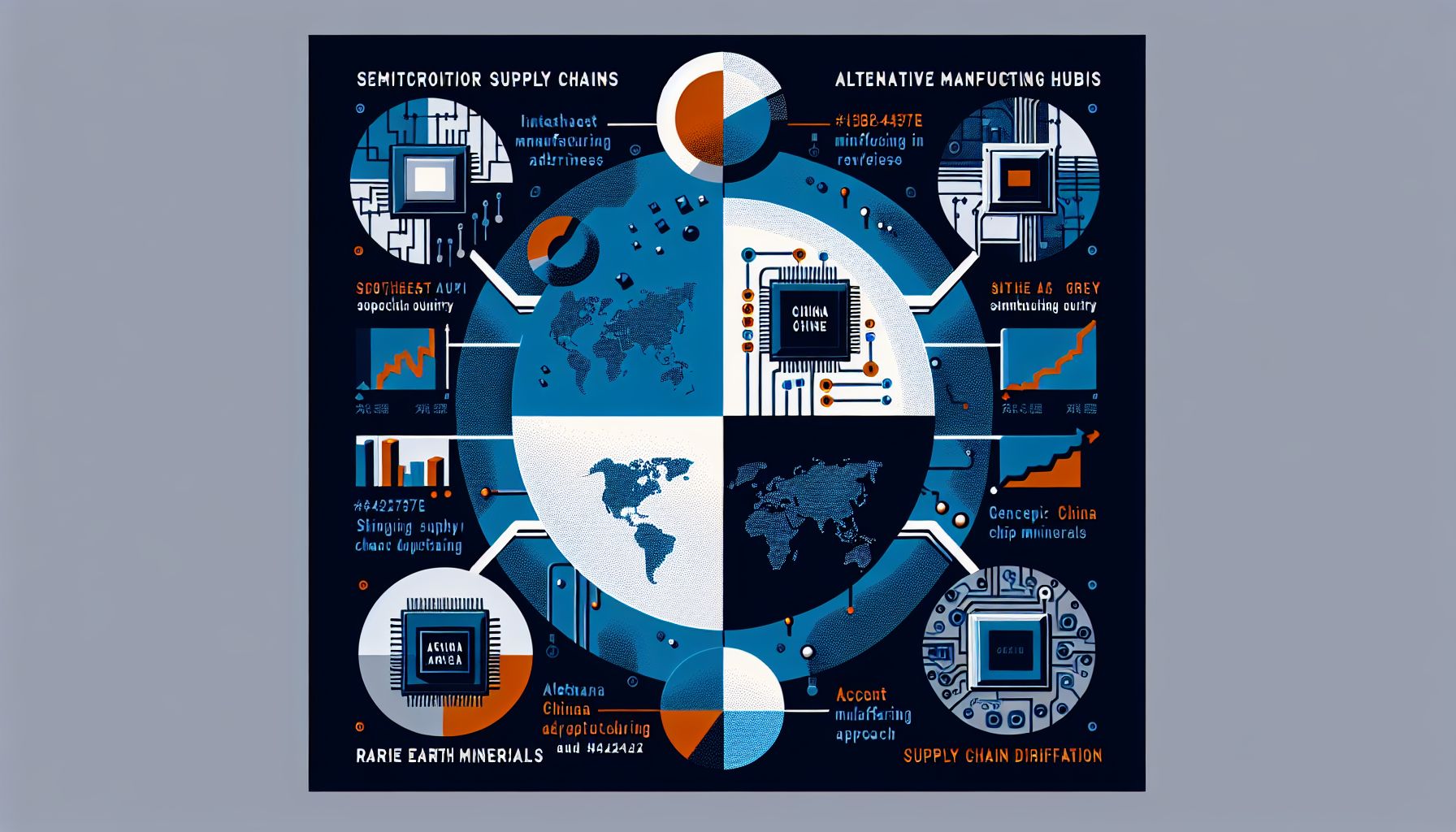
The escalating tensions between the U.S. and China are causing significant disruptions in the semiconductor supply chains. This decoupling affects major companies like NVIDIA, Intel, and TSMC as they navigate restricted access to the Chinese market. Consequently, Chinese firms such as Huawei are innovating homegrown alternatives to bypass U.S. technologies. The move away from China is challenging, given its established infrastructure and skilled labor force, leading to potential inefficiencies and increased costs. Rare earth minerals, essential for high-tech products and largely controlled by China, add another layer of complexity. Companies like Apple are exploring alternate manufacturing hubs in countries like Vietnam and India. Businesses are adopting strategies like the ‘China+1’ approach to diversify their supply chains. This shift represents one of the most significant disruptions to technology supply chains, demanding strategic adaptation and investment in regional ecosystems.
Market implications of semiconductor restrictions
The U.S.-China economic decoupling, driven by trade wars and national security concerns, is significantly impacting global technology supply chains [1]. Companies like NVIDIA and Intel face limited access to the Chinese market [1]. This restriction particularly affects the electric vehicle sector, where market growth slowed in 2024 due to intensified competition and changing government subsidies [3]. The annual U.S. trade deficit with Japan, approximately $70 billion, exemplifies the complex interconnections in global semiconductor trade [4].
China’s strategic countermeasures
Beijing has launched retaliatory actions against U.S. technological sanctions, including restricting rare earth element supplies and implementing punitive measures against American companies operating in China [5]. Chinese firms like Huawei are developing domestic alternatives to U.S. technology [1]. China’s control over 60% of global rare earth minerals production creates a significant leverage point in the ongoing tech war [1].
Corporate adaptation strategies
Companies are actively rethinking their sourcing strategies, with Apple exploring alternative manufacturing locations in Vietnam and India [1]. The transition poses significant challenges due to China’s established infrastructure and skilled workforce [1]. Businesses are implementing strategic approaches including supply chain diversification through ‘China+1’ strategies, investing in regional ecosystems, building strategic reserves, and enhancing supply chain visibility through advanced technology [1].
Global economic impact
The global economy faces headwinds from this technological decoupling, compounded by China’s economic slowdown, real estate market challenges, and excess production capacity [3]. These factors are creating vulnerabilities including over-reliance on single suppliers, increased costs, reduced resilience, and technological fragmentation [1]. President-elect Trump’s potential policies and threatened tariffs add further uncertainty to the semiconductor sector’s future [4].