nvidia's h100 chip revolutionizes ai landscape
Santa Clara, Thursday, 16 January 2025.
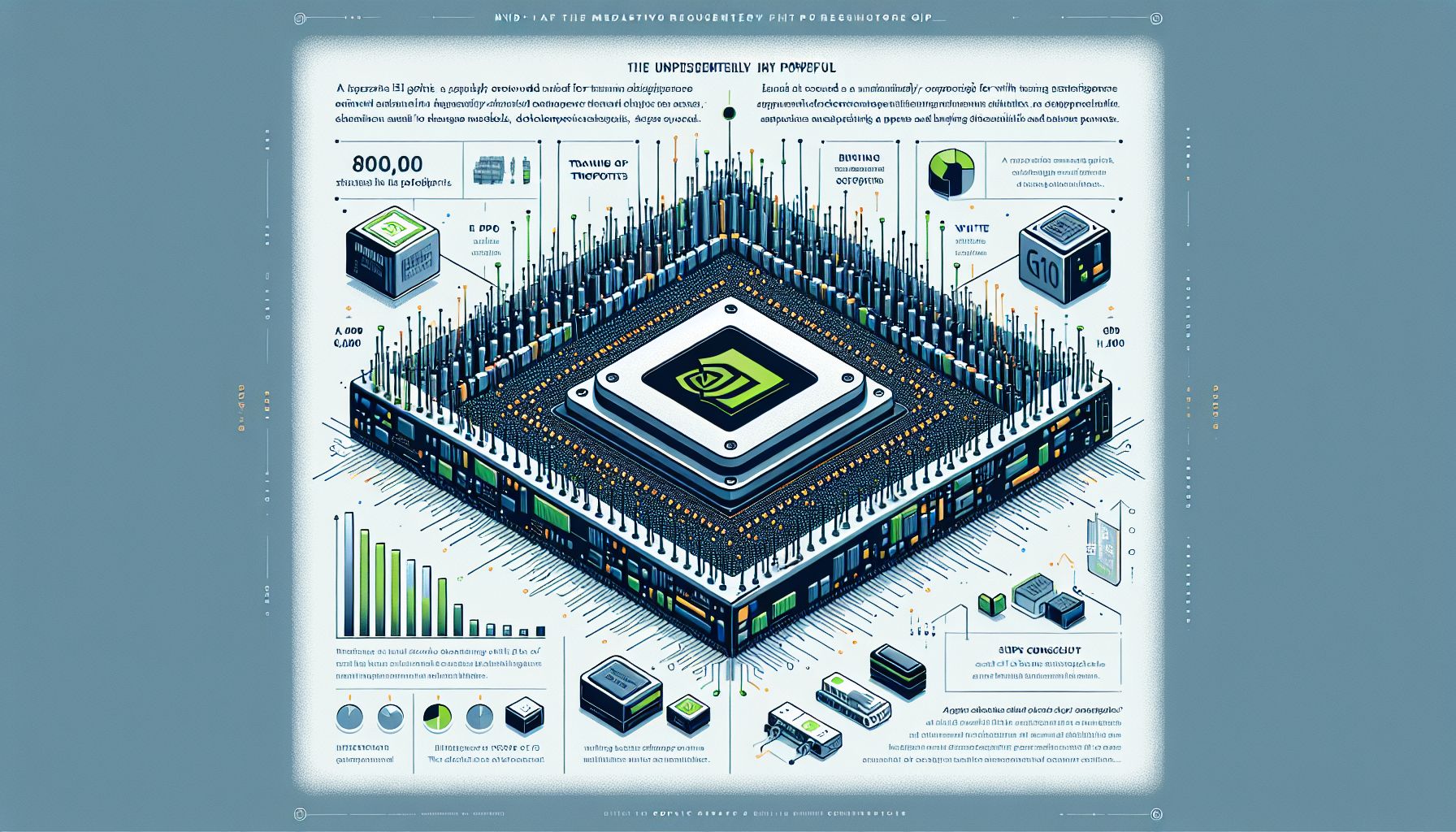
nvidia’s h100 gpu chip is setting new benchmarks in the ai semiconductor market. As the most powerful gpu available, the h100 is pivotal for advanced artificial intelligence applications. It boasts an impressive 80 billion transistors, significantly outpacing its predecessor, the a100. This capability allows for rapid data processing essential for training large language models, developing self-driving technology, and enhancing medical diagnostics. The h100’s unmatched performance has led to a high demand, resulting in a shortage with production capped at 550,000 units this year. Despite its scarcity, nvidia has already announced the gh200, the h100’s successor, promising even greater capabilities upon its 2024 release. The h100’s impact is undeniable, marking a critical step forward in ai innovation and solidifying nvidia’s role at the forefront of technological advancement.
Market dynamics and pricing
The unprecedented demand for NVIDIA’s H100 GPU has created significant market implications. The chip currently commands a premium price point of $32,995 per unit [3], reflecting its critical role in AI infrastructure. Microsoft Azure has integrated the H100 into its cloud computing services, offering various instance types including configurations with up to 8 GPUs and 1900GB CPU memory [6]. This enterprise-level adoption demonstrates the H100’s position as a cornerstone of modern AI infrastructure.
Technical superiority
The H100’s technical specifications underscore its market-leading position. With 80 billion transistors - six times more than its predecessor, the A100 [1] - the chip delivers exceptional processing capabilities. The H100 features a 94GB memory interface and 6016-bit HBM3 memory, achieving a remarkable bandwidth of 3938GB/s [3]. These specifications enable the rapid processing of large datasets essential for training sophisticated AI models [1].
Supply constraints and future outlook
NVIDIA faces significant production constraints, with manufacturing capacity limited to 550,000 H100 chips this year [1]. This supply limitation has created a competitive market dynamic where demand far exceeds availability. Looking ahead, NVIDIA has announced the GH200, scheduled for release in 2024 [1]. This next-generation chip is expected to further advance AI computing capabilities, though specific performance metrics are yet to be revealed [alert! ‘exact GH200 specifications not provided in sources’].