tsmc's global ambitions amid geopolitical challenges
Taipei, Thursday, 12 December 2024.
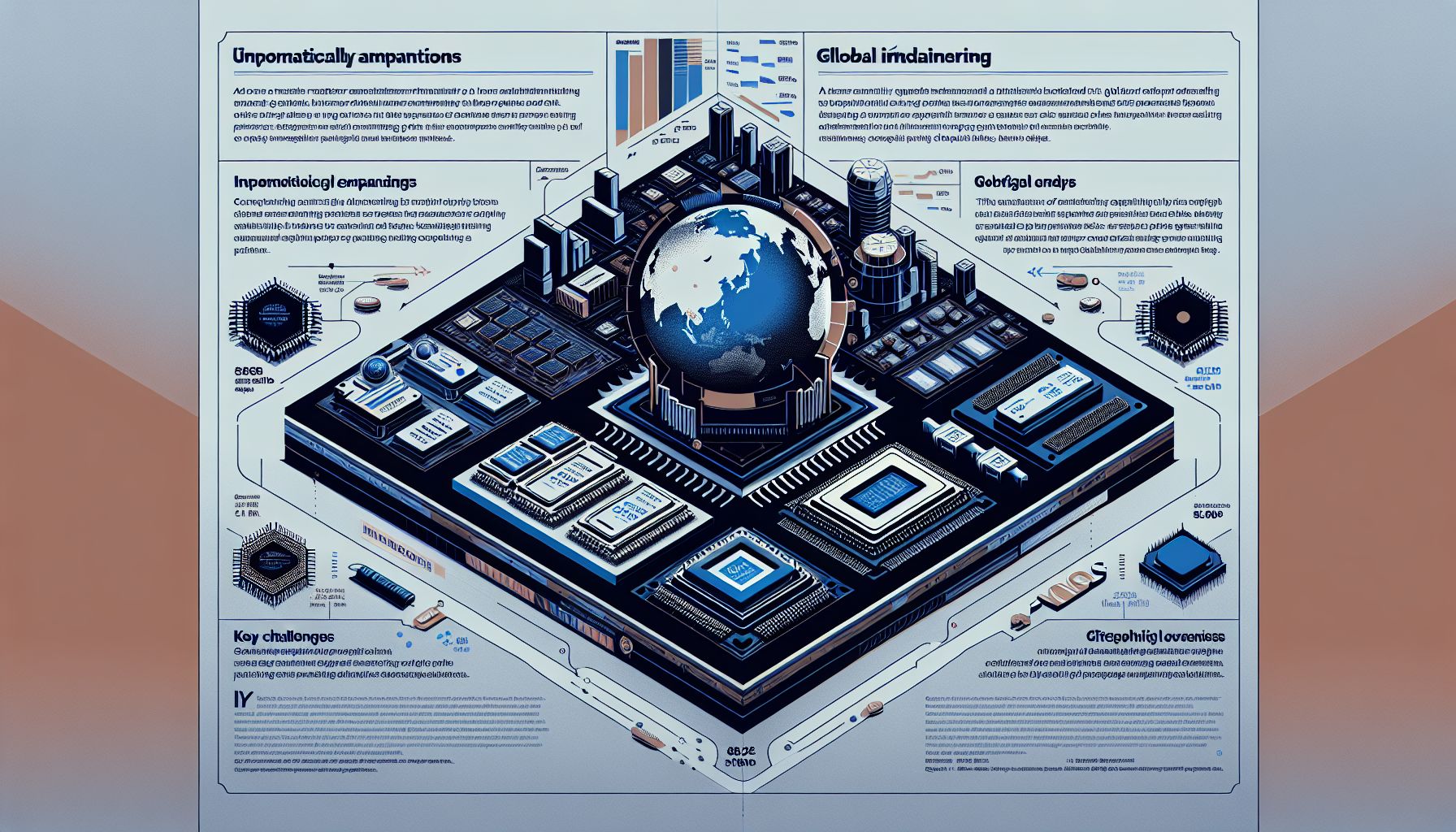
Taiwan Semiconductor Manufacturing Company (TSMC) is navigating complex geopolitical dynamics as it seeks to expand its operations beyond Taiwan. This move is driven by the need to mitigate risks associated with geopolitical tensions, particularly those involving China. TSMC’s strategic expansion efforts are crucial for maintaining its leadership position in the semiconductor industry, which is vital for global technology sectors. The company controls over 60% of global semiconductor foundry spending and faces competition from major players like Samsung and Intel. Geopolitical risks, including potential disruptions due to China’s actions, pose significant challenges. TSMC’s ongoing expansion reflects a strategic response to these threats, aiming to secure its market dominance amid rising demand for AI and high-performance computing chips. The company’s ability to address these geopolitical challenges will shape its future growth and market valuation.
Market dominance and financial performance
TSMC’s commanding position in the semiconductor industry is reflected in its impressive financial metrics. The company controls over 60% of global chip foundry spending [5] and has achieved a robust gross margin of 54.45% in Q3 2024 [2]. The market has responded positively to TSMC’s performance, with the stock showing a year-to-date return of 86% [2]. Earnings projections remain strong, with analysts forecasting EPS of $7.12 for FY 2024 and $8.64 for FY 2025 [2].
Strategic expansion and risk mitigation
TSMC is actively diversifying its manufacturing footprint to address geopolitical risks. The company recently broke ground on a new production facility in Dresden, Germany [4], demonstrating its commitment to global expansion. This strategic move aims to reduce concentration risks in Taiwan and ensure supply chain resilience. The company has allocated a capital expenditure budget of over $30 billion for 2024 [2], with expectations for increased investment in 2025 to support its expansion strategy.
AI-driven growth and technological leadership
TSMC’s growth trajectory is increasingly tied to artificial intelligence applications. The company is positioned as a primary beneficiary of growing AI chip demand, particularly with its advanced N2 (2nm) technology [2]. A significant development is TSMC’s potential production of Nvidia’s Blackwell AI chips at its new Arizona factory [5]. The company is also forging strategic partnerships, as evidenced by its recent collaboration with Rohm for GaN semiconductor technology development [4].
Regional partnerships and economic impact
TSMC’s strategic importance extends beyond manufacturing capabilities. The company’s operations are increasingly intertwined with regional economic stability, as evidenced by South Korea’s recognition of Taiwan Strait stability in its Indo-Pacific Strategy [3]. This geopolitical significance is underscored by the fact that over 90% of South Korea’s maritime trade relies on routes through the Taiwan Strait [3]. Economic forecasts reflect confidence in Taiwan’s technology sector, with GDP growth projections of 2.8% to 3.16% for 2024 [6].
Bronnen
- money.usnews.com
- www.investing.com
- globaltaiwan.org
- www.electrive.com
- 247wallst.com
- www.taipeitimes.com