rtx 5060 ti bandwidth bottleneck? pci-e scaling impact explored
Santa Clara, Wednesday, 16 April 2025.
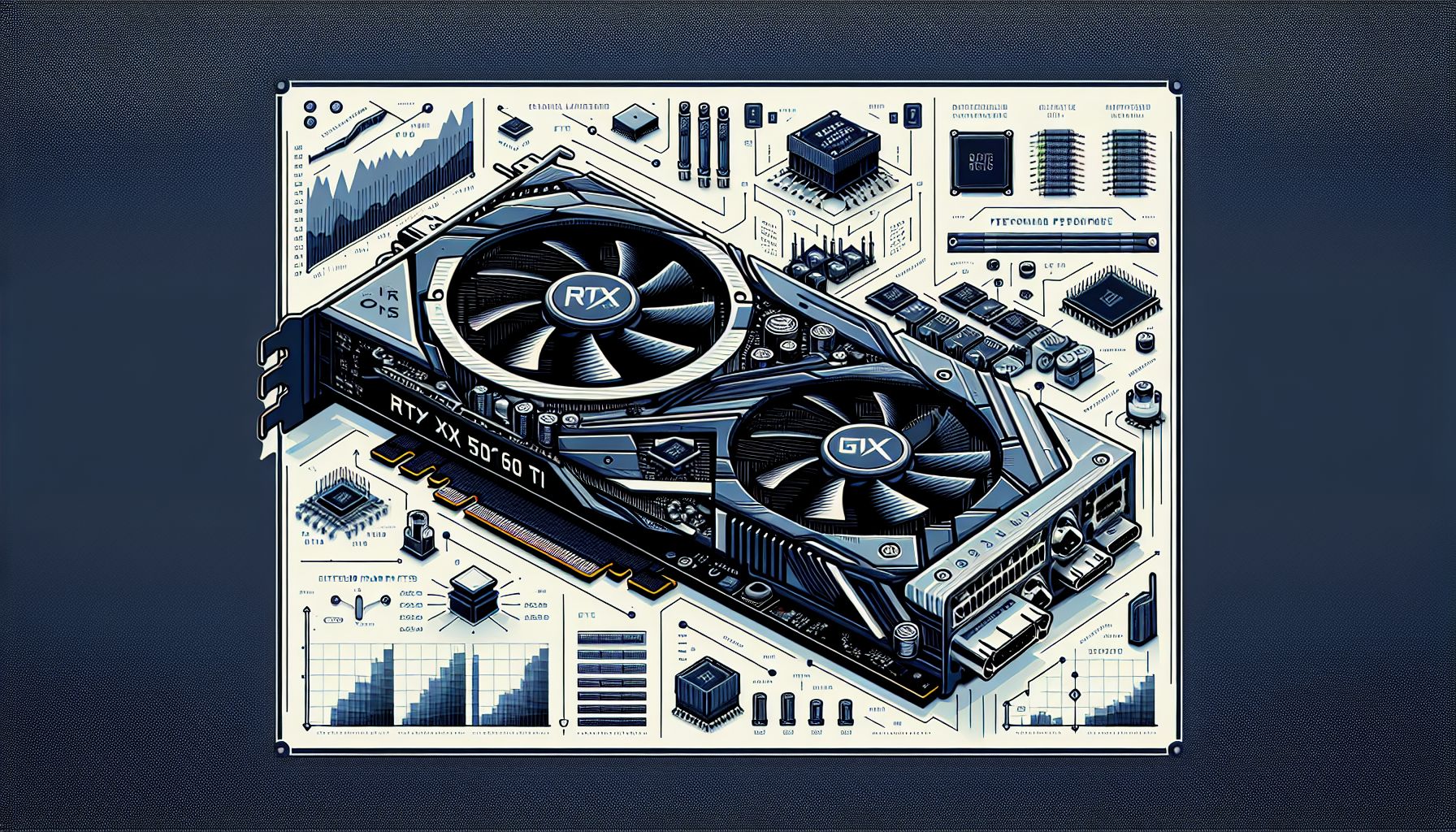
The new RTX 5060 Ti utilizes a PCI-Express 5.0 interface. It is limited to an 8-lane configuration. This reduces its bandwidth. It has half the bandwidth of higher-end models. Initial tests reveal potential performance limitations on older systems. Motherboards lacking PCIe Gen 5 slots could bottleneck the card. The RTX 5060 Ti might face challenges reaching its full potential on older systems. The card achieves double the frame rates with lowered latency. This is only when paired with high-end motherboards. Find out how this will impact performance.
rtx 5060 ti specs and market positioning
NVIDIA’s GeForce RTX 5060 Ti, launched today, comes in 8 GB and 16 GB variants, priced at $379 and $429, respectively [4][8]. This new card utilizes the Blackwell architecture, bringing Neural Rendering and the AI Management Processor (AMP) to the mainstream market [4]. The RTX 5060 Ti features 4,608 CUDA cores, 36 RT cores, and 144 Tensor cores [8]. It also boasts a boost clock of 2,572 MHz and a 180W board power [8]. The card targets 1080p gaming and can handle 1440p with DLSS 4 [4]. This positions the RTX 5060 Ti as a key player in the performance segment, succeeding the RTX 4060 Ti [1].
pci-express configuration and bandwidth implications
The RTX 5060 Ti uses a PCI-Express 5.0 x8 interface [1]. While PCIe 5.0 offers double the bandwidth of PCIe 4.0, the x8 configuration means it has the same bandwidth as a PCIe 4.0 x16 slot [1]. This design choice raises concerns. Many mid-range motherboards with AMD B650 or Intel B660/760 chipsets only offer PCIe 4.0 x16 slots [1]. These motherboards might limit the RTX 5060 Ti’s performance [1]. This could affect NVIDIA’s market strategy, especially for gamers using older systems. They might not experience the card’s full potential without upgrading their motherboards.
performance benchmarks and real-world impact
Reviews show the RTX 5060 Ti 16GB delivers strong performance in various games [8]. Assassin’s Creed Mirage runs at up to 103 fps at QHD settings [8]. Final Fantasy XIV: Dawntrail achieves up to 161 fps at FHD [8]. Call of Duty: Black Ops 6 can reach 124 fps at QHD [8]. However, these benchmarks are from systems with optimal PCIe configurations [1]. Performance may decrease on systems with PCIe 4.0 x8 or PCIe 3.0 x8 [1]. This variance could influence consumer perception and purchasing decisions, impacting NVIDIA’s revenue projections.
nvidia’s dlss 4 and competitive advantages
NVIDIA is introducing DLSS 4 and Multi Frame Generation with the RTX 5060 series [4]. DLSS 4 can generate up to three additional frames per traditionally rendered frame [5]. This multiplies frame rates by up to 8x over brute-force rendering [5]. The RTX 5060 Ti offers double the frame rates and lowered latency compared to the RTX 4060 Ti [5]. This technology gives NVIDIA a competitive edge [5]. It helps to offset potential bandwidth limitations [1]. This could bolster NVIDIA’s market position despite concerns about PCIe configurations.
market analyst perspectives and nvda stock
Analysts are closely watching how the PCIe x8 configuration affects real-world performance. Any significant bottleneck could negatively impact consumer satisfaction. This could lead to a decrease in sales. However, the RTX 5060 Ti’s competitive pricing and DLSS 4 capabilities may mitigate these concerns. The 16GB model is recommended for its increased memory capacity [8]. This could drive higher average selling prices. The overall success of the RTX 5060 Ti will influence investor sentiment and the performance of NVDA stock.
Bronnen
- www.techpowerup.com
- www.eurogamer.net
- www.reddit.com
- www.techpowerup.com
- www.reddit.com
- wccftech.com
- www.nvidia.com
- www.club386.com