china aims to break asml's monopoly with domestic euv lithography tool
dongguan, Sunday, 9 March 2025.
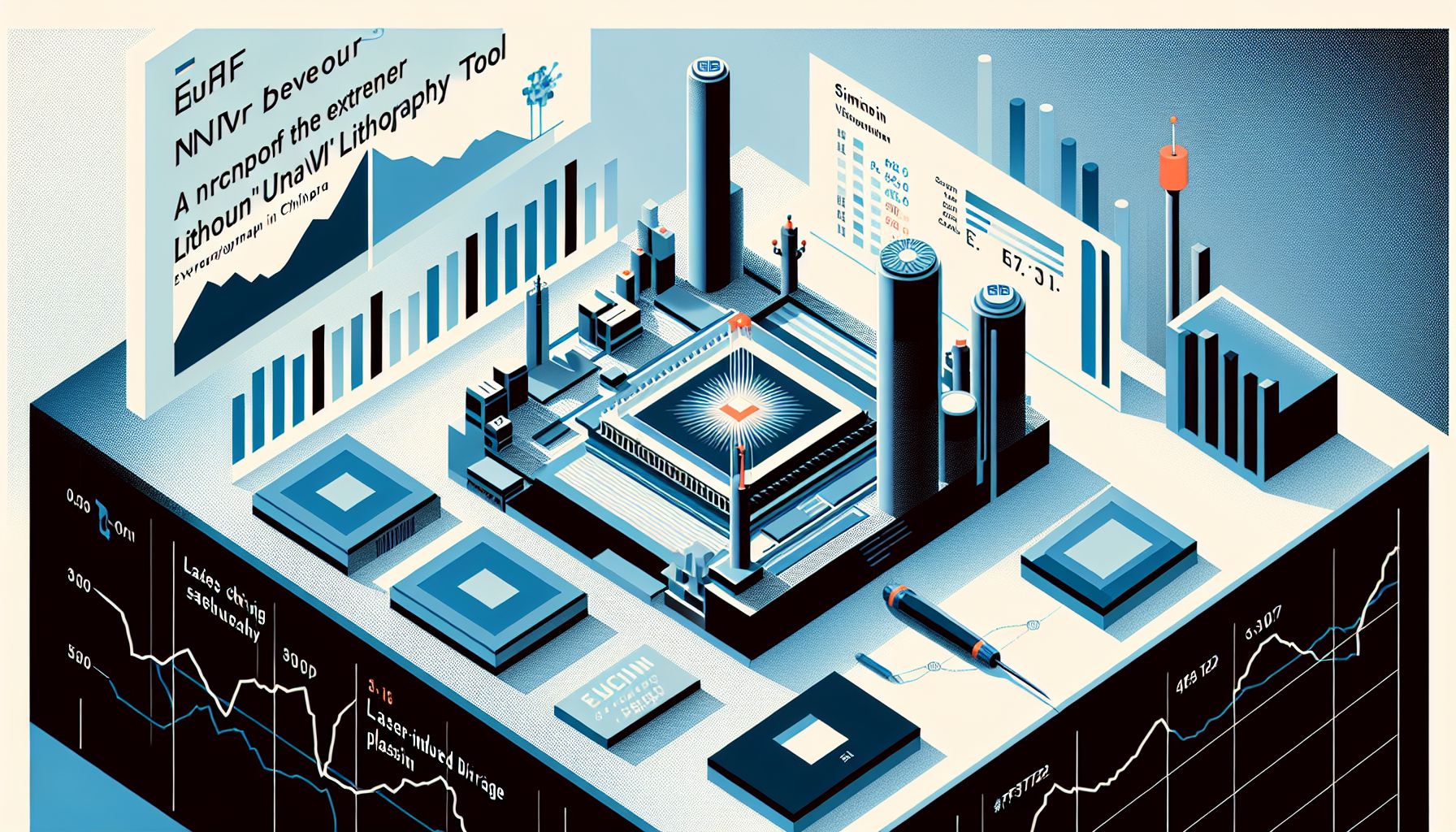
china is reportedly developing its own extreme ultraviolet (euv) lithography tool. this could challenge asml’s dominance in the semiconductor industry. huawei is testing the new system, which utilizes laser-induced discharge plasma (ldp) technology. the ldp method could offer advantages over asml’s laser-produced plasma (lpp) technique. these advantages include reduced footprint, improved energy efficiency, and potentially lower production costs. trial production is scheduled for q3 2025, with mass manufacturing targeted for 2026. a successful rollout could provide an upgrade path for older duv scanners.
EUV lithography explained
EUV lithography is critical for manufacturing advanced semiconductors [1]. Standard deep ultraviolet (DUV) lithography systems use 248 nm and 193 nm wavelengths [1]. EUV uses just 13.5 nm radiation [1]. The shorter wavelength of EUV allows for the creation of more intricate and densely packed circuits on silicon wafers [1]. This results in more powerful and energy-efficient chips [GPT]. Multiple patterning techniques are required to achieve advanced nodes when using DUV [1].
ldp versus lpp
The Chinese system uses laser-induced discharge plasma (LDP) to generate EUV radiation [1]. This involves vaporizing tin between electrodes and converting it to plasma via high-voltage discharge [1]. Electron-ion collisions then produce the required wavelength [1]. ASML’s systems rely on laser-produced plasma (LPP) [1]. The LDP method may offer a simplified architecture and improved energy efficiency [1]. It could also lead to lower production costs compared to LPP [1].
challenges and asml’s dominance
The Huawei system still faces questions regarding resolution, throughput, and integration [1]. Integrating the EUV scanners into existing workflows takes time [1]. Commercializing an alternative EUV lithography tool would challenge ASML’s market position [1]. ASML’s latest High-NA EUV tool is expensive, costing around $380 million [1]. The development could provide much-needed upgrades for older DUV scanners [1]. This previously limited domestic chip production [1].
implications for asml’s stock
China’s progress in EUV technology could impact ASML’s future order book [1]. A successful domestic EUV tool would reduce China’s reliance on ASML [1]. ASML has refined its LPP-based systems over decades [1]. However, the inherent efficiency advantages of LDP could accelerate China’s progress [1]. The impact on ASML’s stock (ASML:AMS) will depend on the performance and adoption of the Chinese EUV system [alert! ‘requires monitoring of market response and further developments’].