chips act program in turmoil after staff cuts and economist exit
Washington, Tuesday, 1 April 2025.
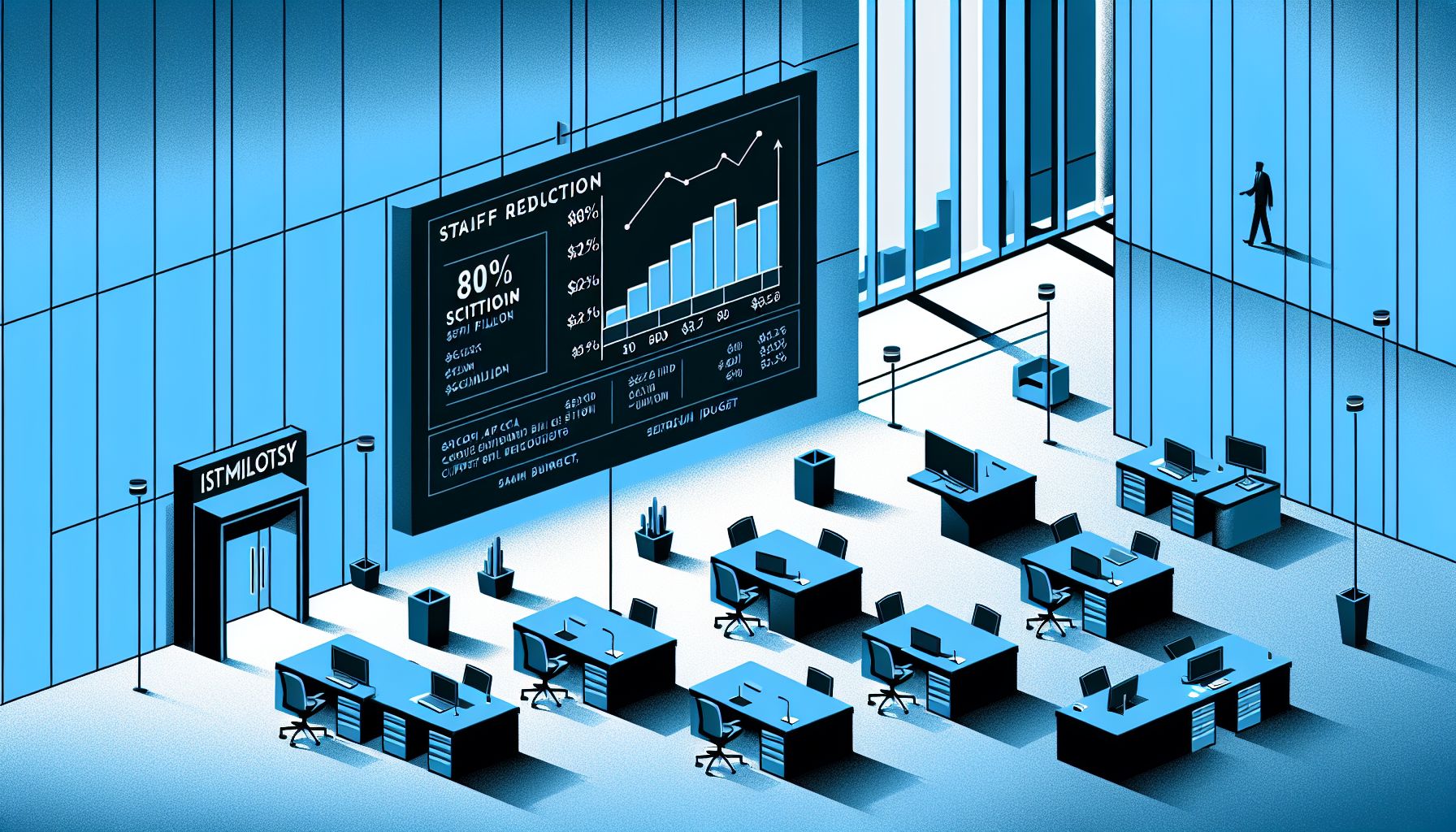
The US Chips Act program faces an uncertain future. Eighty percent of the program office staff were let go. This follows president trump’s intention to repeal the act. Dan Kim, the chief economist, also resigned. The Chips and Science Act of 2022 allocated $52.7 billion in subsidies. The aim was to boost us semiconductor manufacturing. Now, the drastic staff reduction is raising concerns about the program’s future and its ability to support companies like Samsung and SK Hynix.
impact on samsung and sk hynix
The departure of Dan Kim, who had a deep understanding of Korean firms, has heightened concerns [1]. Specifically, there are worries about whether Samsung and SK Hynix will receive their anticipated subsidies [1]. Samsung, currently constructing a chip production facility in Taylor, Texas, was slated to receive $4.745 billion in subsidies from the biden administration [1]. This amount represents approximately 12.8% of Samsung’s total investment [1]. However, Trump’s criticism of the Chips Act and sanctions against Covington & Berlin, Samsung’s legal representatives, add further uncertainty [1].
trump’s alternative approach
President Trump has established the United States Investment Accelerator [2]. This new entity will assume oversight of the Chips Act program [2]. The goal is to expedite corporate investments within the US [2]. The Investment Accelerator aims to negotiate better deals and reduce regulatory burdens [2]. It also seeks to speed up permitting processes [2]. The White House claims this will lead to more efficient allocation of resources [2].
broader implications for the semiconductor industry
The uncertainty surrounding the Chips Act has already impacted companies like Wolfspeed [8]. The company’s stock price plummeted by 51.86 percent due to concerns about debt and subsidies [8]. Wolfspeed is exploring alternative debt options and negotiating with bondholders [8]. Despite the challenges, Wolfspeed received a $192 million tax refund and anticipates a total refund of $1 billion under Section 48D [8]. These funds are intended to bolster its capital structure and support operations [8].
texas instruments proceeds with caution
Even with the changes to the Chips Act, Texas Instruments (TI) is moving ahead with its expansion plans [7]. The company received up to $1.6 billion from the Biden administration to build new facilities, including one in Lehi, Utah [7]. While TI has announced layoffs in Lehi, city officials state that these cuts will not affect the expansion [7]. TI affirms its commitment to Utah and its long-term manufacturing strategy [7]. The layoffs did not trigger the WARN Act, suggesting the cuts were less than one-third of the workforce [7].
dsm semichem expansion continues
Despite the broader uncertainty, some projects are still moving forward [4]. DSM Semichem in Plainview, Texas, received a $7.87 million grant from the state [4]. These funds will support the expansion of its materials and chemical facility [4]. The expansion is expected to create 40 new jobs [4]. The grant is part of the Texas Semiconductor Innovation Fund, which stems from the 2023 CHIPS Act [4]. This brings DSM’s total investment in the Plainview facility to $176 million [4].
Bronnen
- cnnews.chosun.com
- www.theguardian.com
- wccftech.com
- www.lubbockonline.com
- www.c-span.org
- kslnewsradio.com
- www.msn.com
- www.smbom.com