chinese giants fuel $16 billion nvidia h20 order surge amid us export concerns
hong kong, Wednesday, 2 April 2025.
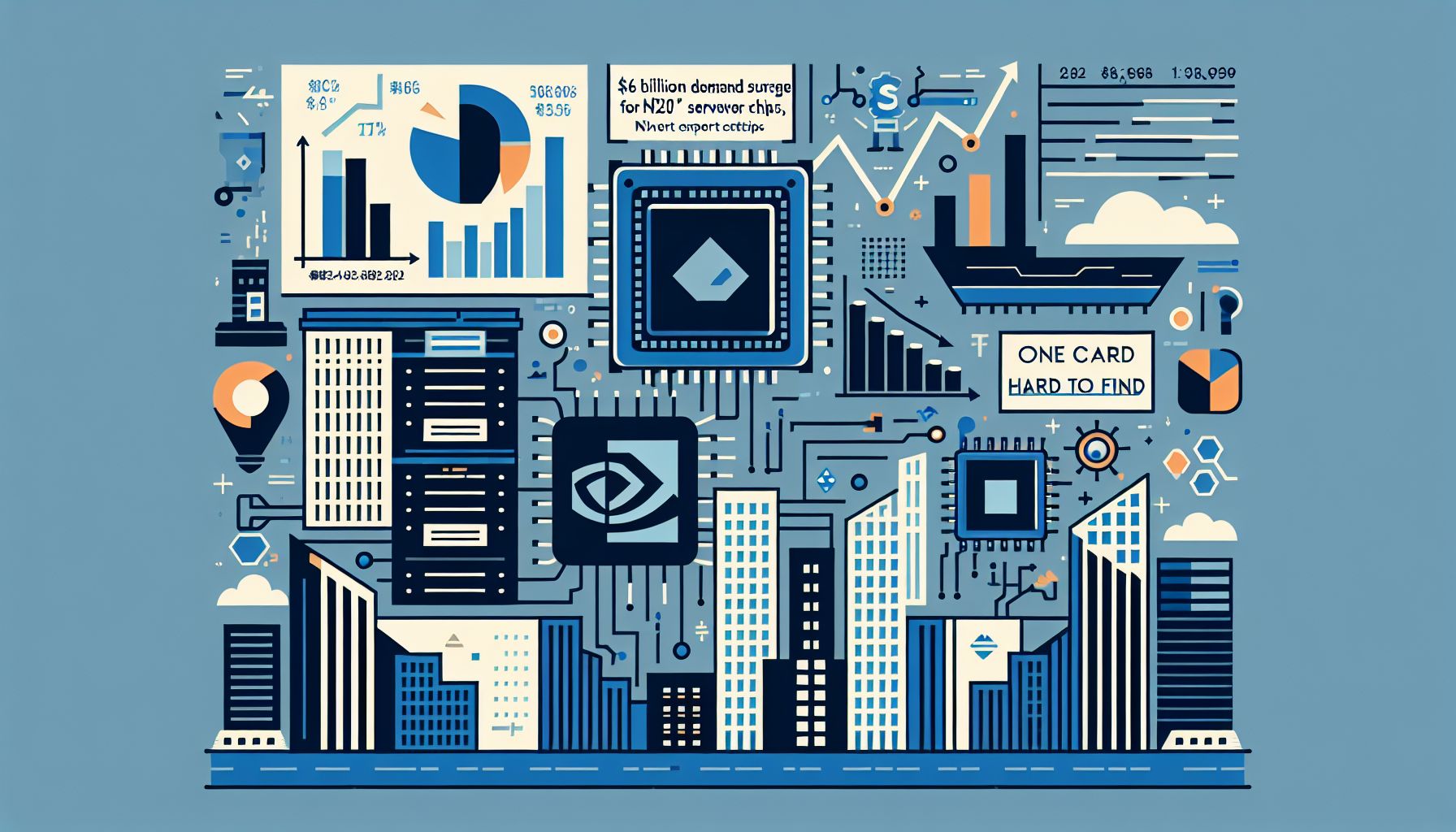
despite us export restrictions, bytedance, alibaba, and tencent have placed orders for nvidia’s h20 ai server chips, totaling over $16 billion. this demand highlights china’s ai computing needs, even with limited access to advanced tech. the h20 is nvidia’s most powerful chip for sale to china. but a looming us ban could halt h20 production, creating a ‘one card hard to find’ situation, with some chinese firms reportedly paying a premium for the chips.
Nvidia’s market position
The surge in H20 orders underscores Nvidia’s significant market position in China’s AI sector, even with restricted access to its top-tier technology [1]. These orders, totaling $16 billion in the first three months of 2025, highlight Nvidia’s ability to adapt to export regulations by offering modified products like the H20 [1][4]. This demonstrates Nvidia’s responsiveness to specific market needs, solidifying its presence despite limitations [2]. The demand is driven by Chinese tech giants like ByteDance, Alibaba, and Tencent, who are investing heavily in AI computing power [1][4].
Revenue potential and stock impact
The $16 billion order surge represents a substantial revenue opportunity for Nvidia, contingent on its ability to deliver the chips before potential U.S. restrictions take effect [1]. Nvidia’s revenue from China, including Hong Kong, reached $17.11 billion in fiscal year 2025, accounting for a notable portion of its total revenue [8]. While CEO Jensen Huang anticipates no major short-term impact from potential restrictions, the long-term implications for Nvidia’s revenue streams and stock performance remain a key consideration for investors [8]. The situation highlights the delicate balance Nvidia must maintain between global market access and regulatory compliance.
Competitive advantage and deepseek influence
Despite being a ‘downgraded’ chip, the H20 maintains a competitive edge due to its compatibility with Nvidia’s CUDA software ecosystem and NVLink multi-card interconnectivity [2]. This compatibility makes the H20 a preferred choice for deploying large-scale computing clusters compared to domestic Chinese AI chips [2]. The rise of DeepSeek, a low-cost AI model, has further fueled demand for H20, previously considered less desirable due to its lower computing power than H100 and H800 chips [2][6]. Tencent and Alibaba are reportedly increasing their H20 purchases to support DeepSeek model deployment, solidifying H20’s role in the Chinese AI landscape [5][6].
Supply concerns and market dynamics
Supply chain uncertainties and the potential for a U.S. ban on H20 sales have created a supply shortage, leading to increased rental prices and a ‘one card hard to find’ situation [3][5]. Chinese server manufacturer New H3C has reported near depletion of its H20 inventory due to international supply chain issues [5]. This scarcity has driven some companies to lease computing power and accelerated demand for AI server solutions from companies like Huawei, Cambricon, and Hygon [2]. The situation underscores the importance of Nvidia’s supply chain management and its ability to navigate geopolitical tensions to maintain market share.
Bronnen
- www.theinformation.com
- www.eet-china.com
- www.digitimes.com.tw
- www.aastocks.com
- blog.csdn.net
- www.worldjournal.com
- gb-www.digitimes.com.tw
- techstartups.com