intel's strategic split may benefit competitors
Taipei, Monday, 17 February 2025.
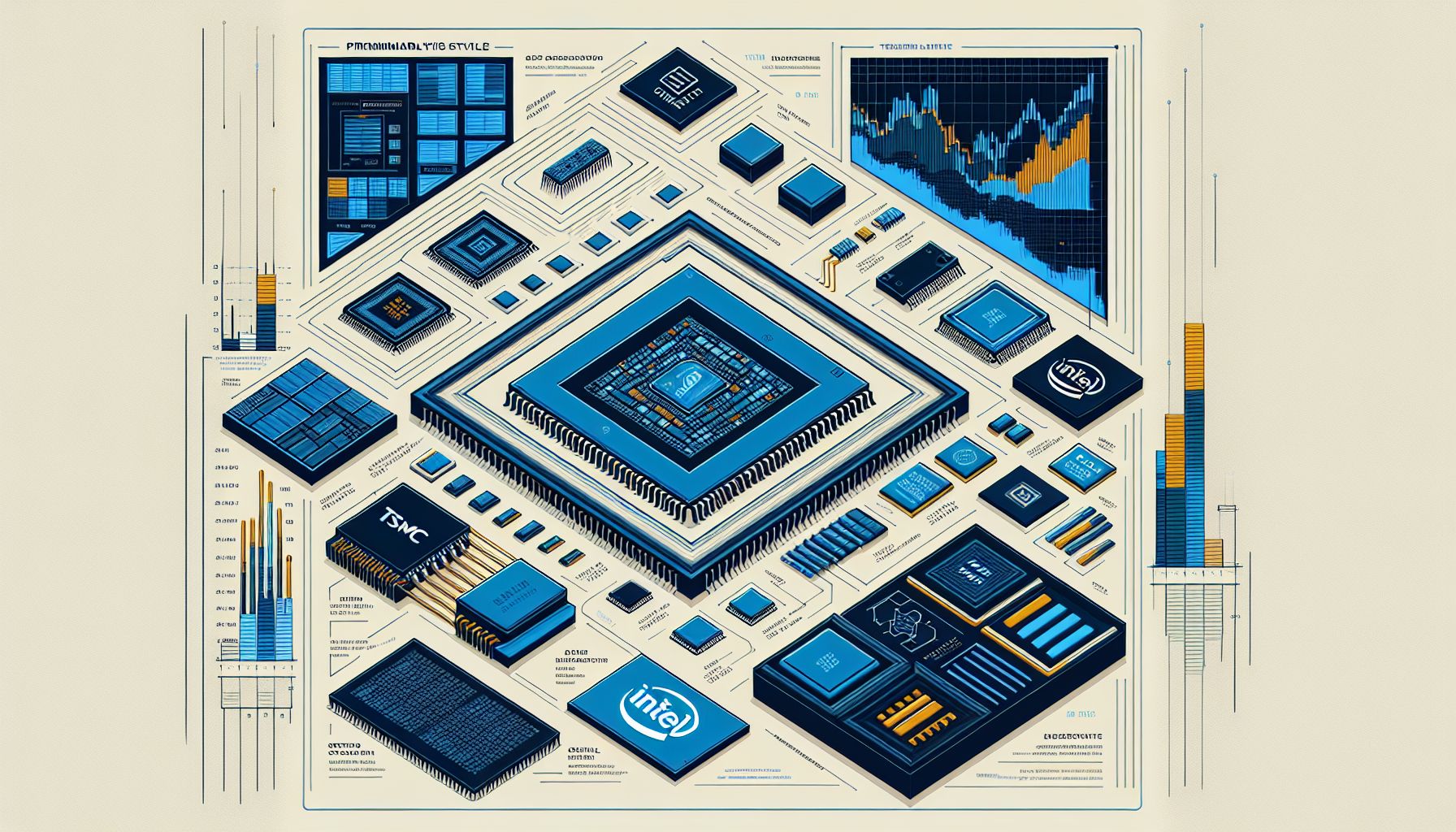
Intel, once a leader in chip manufacturing, is reportedly considering splitting its business to address its lagging technology. The move could open doors for competitors TSMC and Broadcom. TSMC, a global leader in semiconductor manufacturing, is exploring the potential to acquire Intel’s manufacturing facilities. Meanwhile, Broadcom aims to take over Intel’s chip design and marketing divisions. This potential shift reflects a broader industry trend where companies focus exclusively on either chip manufacturing or design, rather than both. Talks are still in preliminary stages, and no formal offers have been made. Any deal would require U.S. government approval, given Intel’s importance to national security. The decision to split would provide Intel with financial relief and allow it to concentrate on developing new design solutions, positioning itself better in a competitive market. The development has caught the attention of industry stakeholders and could reshape the semiconductor landscape.
TSMC’s manufacturing interest
TSMC is exploring the possibility of acquiring partial or complete control of Intel’s chip manufacturing facilities [1][2]. The potential acquisition could be structured through an investment consortium or alternative arrangements [1]. However, the Trump administration has indicated it may not support foreign entities operating Intel’s U.S. facilities [2][3], despite encouraging initial discussions between TSMC and government officials [4].
Broadcom’s design division pursuit
Broadcom has been closely evaluating Intel’s chip design and marketing operations [1][2]. The company has conducted private discussions with advisors about a potential acquisition but may only proceed once a partner for Intel’s manufacturing division is secured [1]. All negotiations remain in preliminary stages, with no formal proposals submitted [2][5].
Market implications
The potential split reflects Intel’s struggles with manufacturing technology, having fallen behind TSMC and Samsung [1]. Intel’s stock experienced a 60 percent decline last year [6], while TSMC’s market value now stands at approximately eight times that of Intel [6]. The restructuring could align with the semiconductor industry’s trend toward specialization in either manufacturing or design [1].
Regulatory considerations
Any deal would require U.S. government approval, as Intel is considered crucial to national security [1][4]. Under the CHIPS Act agreements, Intel must maintain majority ownership of any new manufacturing entity [1]. Immigration policies pose additional challenges, as TSMC’s engineering workforce largely comes from outside the U.S. [1][5].
Bronnen
- www.cna.com.tw
- www.voachinese.com
- finance.sina.com.cn
- www.epochtimes.com
- www.zaobao.com.sg
- www.zaobao.com.sg