china's deepseek ai model sparks silicon valley concern
Beijing, Sunday, 26 January 2025.
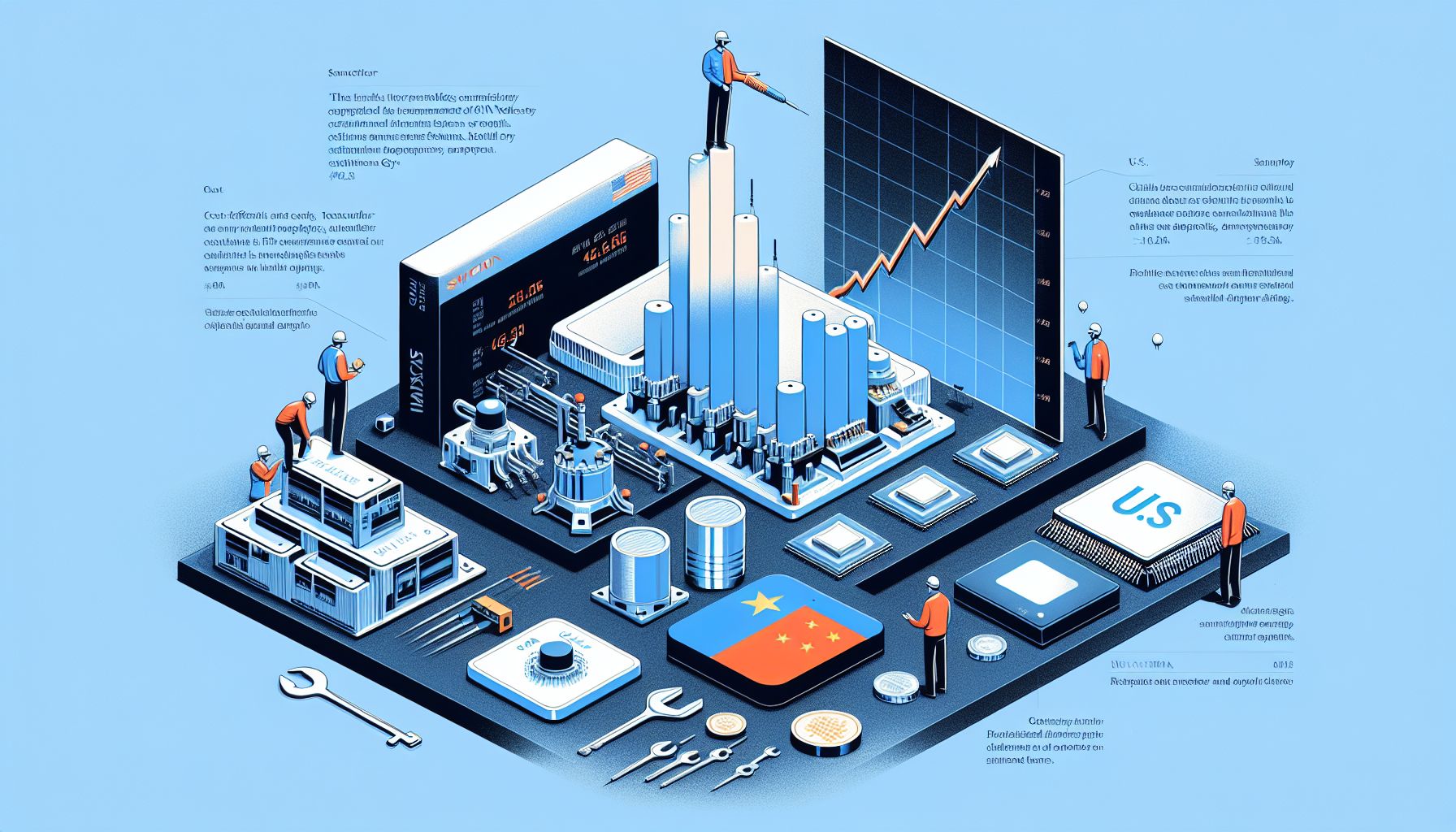
The release of China’s DeepSeek AI model has sent shockwaves through Silicon Valley. Offering competitor-beating performance at a fraction of the cost, DeepSeek was created with less powerful Nvidia chips and cost under $6 million to build. The model outperformed established U.S. giants like Meta, OpenAI, and Anthropic in benchmarks for complex problem-solving in math and coding. Industry experts from Microsoft and Benchmark are urging serious consideration of these advancements, given DeepSeek’s ability to provide high accuracy despite chip restrictions imposed by the U.S. DeepSeek’s emergence represents a shift in the global tech landscape, challenging the dominance of U.S. companies. Its cost efficiency and technological competency amid restrictions highlight a growing trend of innovation originating from necessity. This development raises questions on current U.S. semiconductor policies and their effectiveness in maintaining technological supremacy.
Market reaction and stock impact
The financial markets have responded sharply to DeepSeek’s breakthrough, with NVIDIA’s stock dropping by 2% following DeepSeek-V3’s launch and an additional 3.12% after DeepSeek-R1 discussions [4]. Meta employees reportedly entered ‘panic mode’ due to the Chinese model’s unexpected performance levels [4]. Investment firm Geiger Capital noted that DeepSeek achieves capabilities comparable to OpenAI at merely 3% of the cost [4], prompting investors to reassess valuations in the U.S. AI sector [1].
Technical achievements and cost efficiency
DeepSeek’s R1 model, launched on January 20, 2025, has matched OpenAI’s latest o1 model in performance while using significantly fewer resources [1][3]. The company accomplished this feat using only 2,048 NVIDIA H800 GPUs and $5.6 million in training costs [6], demonstrating remarkable efficiency compared to U.S. competitors [1]. In third-party benchmark tests, DeepSeek’s model outperformed Meta’s Llama 3.1, OpenAI’s GPT-4o, and Anthropic’s Claude Sonnet 3.5 in complex problem-solving tasks [1].
Industry response and strategic shifts
Meta CEO Mark Zuckerberg has announced plans to invest $60-65 billion in AI development for 2025 [6], signaling an aggressive response to Chinese competition. Microsoft CEO Satya Nadella emphasized taking developments from China ‘very, very seriously’ [1]. AI researcher Jeffrey Hinton points to China’s stronger STEM education as a fundamental advantage [4], while industry experts highlight how U.S. restrictions have paradoxically spurred Chinese innovation in efficient AI development [3].
Future market implications
Analysts project the global AI market to reach $990 billion by 2027 [7]. Scale AI founder Alexander Wang suggests DeepSeek’s emergence could ‘change everything’ in the AI race [7]. The success of DeepSeek’s cost-effective approach may reshape industry economics, as companies with modest budgets of $6 million can now compete with billion-dollar enterprises [6]. This democratization of AI development could accelerate innovation and challenge established market dynamics [1][7].
Bronnen
- www.cnbc.com
- www.stdaily.com
- finance.sina.com.cn
- finance.sina.com.cn
- finance.sina.com.cn
- m.yicai.com