nvidia doubles down on us manufacturing amid trade tensions
washington, Thursday, 20 March 2025.
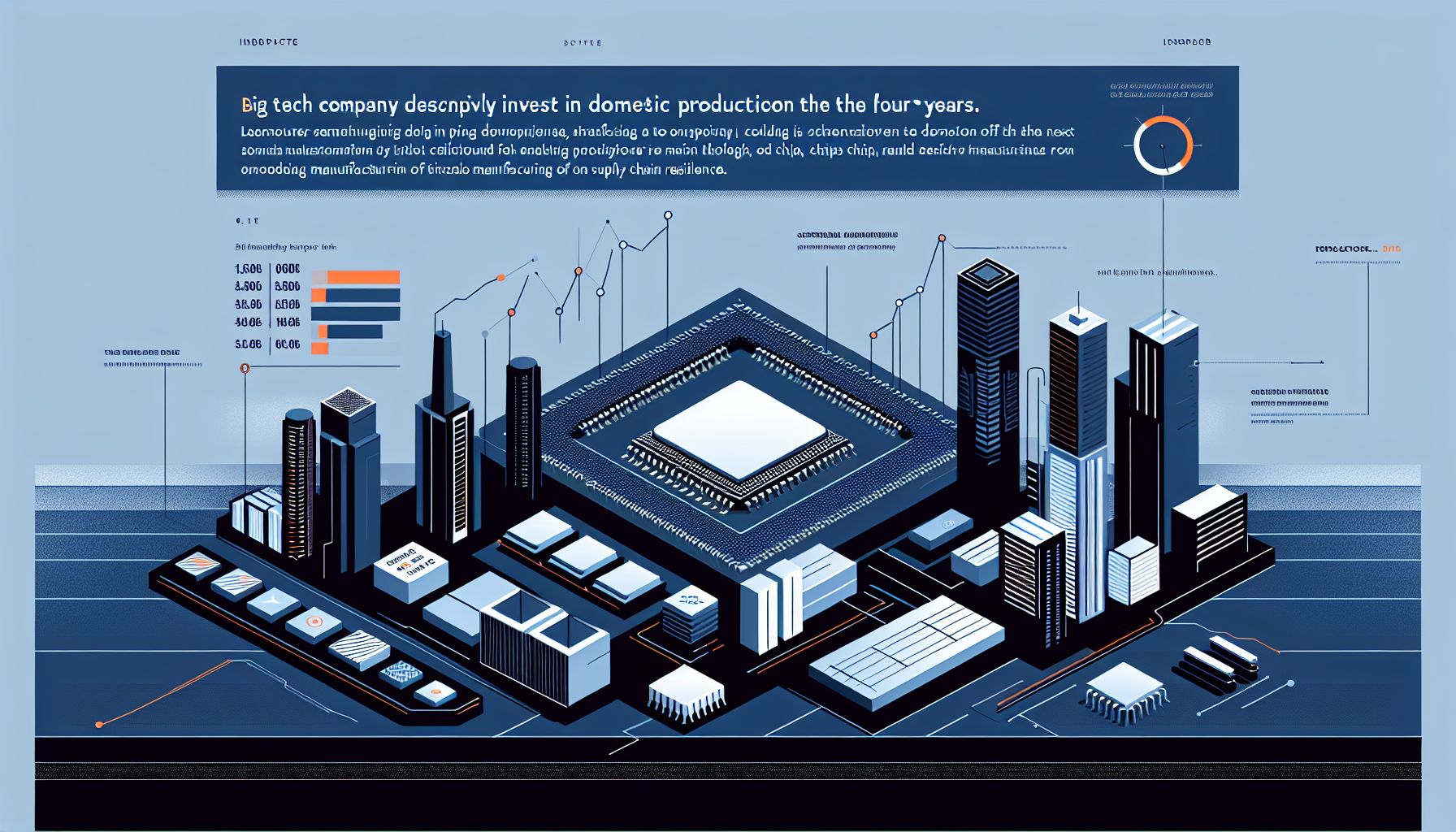
nvidia’s ceo, jensen huang, announced a massive investment in the us supply chain. the move aligns with onshoring trends among tech companies. nvidia plans to spend $500 billion over the next four years on us-made chips and components. the company aims to produce hundreds of billions of dollars worth of electronic products domestically. this decision is influenced by trump’s trade policies and a desire to reduce supply chain concentration. huang believes the trump administration can accelerate the us ai industry. blackwell chips are already being produced in the us, and tsmc’s investment in arizona will boost nvidia’s supply chain resilience.
reshaping market position
Huang’s commitment signals a strategic shift for nvidia, potentially strengthening its market position in the face of geopolitical uncertainties [1]. By increasing domestic production, nvidia aims to mitigate risks associated with international trade policies and enhance supply chain resilience [2]. This move could reassure investors concerned about potential disruptions, positively influencing nvidia’s stock performance [GPT]. Furthermore, a stronger domestic presence may improve nvidia’s relationships with the u.s. government, leading to favorable policies and contracts [alert! ‘requires further policy details and specific contract examples’]. This positions nvidia as a key player in the american ai landscape [6].
revenue potential and ai infrastructure
Nvidia’s focus extends beyond chip sales, evolving into building complete AI infrastructure [3]. Huang highlighted that nvidia is now an ‘ai factory,’ directly contributing to customer revenue [3]. This transformation involves constructing data centers and providing comprehensive AI solutions [3]. Nvidia’s Blackwell Ultra chips are expected to increase data center revenue by 50 times compared to the previous Hopper systems, demonstrating enhanced responsiveness for multi-user AI services [2]. Huang anticipates global computing capital expenditure to reach $1 trillion by the end of the century, with a significant portion dedicated to ai [2].
competitive advantages and challenges
Huang addressed competition from companies developing their own ai chips, arguing that nvidia’s offerings are more flexible and adaptable to rapidly evolving ai algorithms [2]. Despite nvidia’s efforts, huawei remains a formidable competitor, proving the limitations of u.s. restrictions [5]. Huang also commented on deepseek’s ai model r1, stating that such inference ai requires 100 times more computing power than non-inference ai [2]. Nvidia’s strategy involves integrating ai reasoning into all its products, enhancing their ability to apply tools, access information, and generate results [7].
tariffs and supply chain flexibility
While trump’s trade policies pose a potential threat, huang downplayed the short-term impact of tariffs, citing nvidia’s flexible supplier network [3]. Nvidia’s supply chain spans across various countries, including taiwan, mexico, and vietnam [3]. Huang emphasized nvidia’s ability to adapt to changing circumstances by increasing local manufacturing capabilities [7]. Tsmc’s investment in arizona is expected to further enhance nvidia’s supply chain resilience [5]. Nvidia aims to support every country with u.s. technology and standards, ensuring compliance with regulations [7].
Bronnen
- www.ft.com
- www.yicai.com
- www.iccsz.com
- podcasts.apple.com
- finance.sina.com.cn
- finance.sina.com.cn
- stcn.com