vietnam sets sights on global semiconductor leadership
Hanoi, Friday, 3 January 2025.
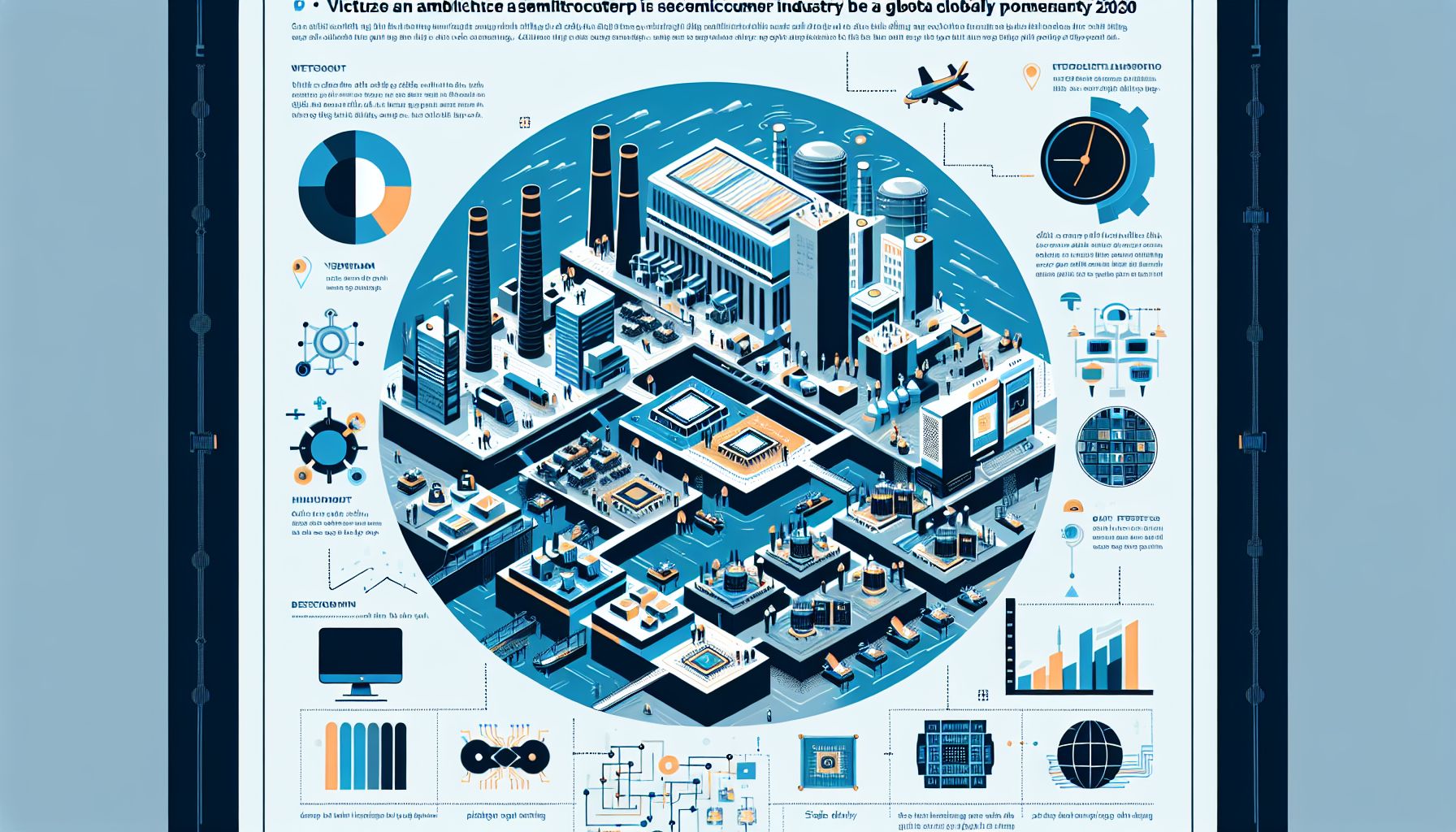
Vietnam has unveiled a strategic plan to elevate its semiconductor industry to global prominence by 2030. The nation aims to become a central hub for chip design, packaging, and testing. This ambitious initiative could reshape the competitive dynamics among industry giants such as TSMC. Vietnam’s government is actively addressing challenges and bottlenecks in the sector, viewing it as a pivotal engine for economic growth. The country has already listed semiconductors as a national priority for the next 30 to 50 years. Cooperation with global tech leaders like Qualcomm, Google, and NVIDIA is part of Vietnam’s strategy. The government is also tackling infrastructure improvements and workforce development to support this vision. Despite these efforts, Vietnam faces significant hurdles, including talent shortages and energy constraints, which could impact its ability to meet the growing demands of the semiconductor and AI industries.
Market impact and investment landscape
Vietnam’s semiconductor ambitions have sparked interest from major industry players and investors. The country has attracted foreign direct investment (FDI) of approximately $31.4 billion by late 2024, with realized capital reaching $21.7 billion, marking a 7.1 percent year-over-year increase [1]. Marvell Technology’s commitment to establish a new design center in Ho Chi Minh City by 2025 [1] signals growing confidence in Vietnam’s semiconductor ecosystem.
Infrastructure and resource challenges
Despite ambitious plans, Vietnam faces critical infrastructure constraints. Power shortages in 2023 resulted in losses estimated at $1.4 billion [1], raising concerns about the feasibility of supporting energy-intensive semiconductor operations. The semiconductor manufacturing process requires approximately 100 megawatt-hours per facility [1], presenting a significant challenge for Vietnam’s already strained power grid.
Global competitive positioning
Vietnam’s emergence could impact established players like TSMC, which is currently expanding its global footprint [2]. Industry analysts are closely monitoring talent movements, as highlighted by recent executive transitions between major semiconductor companies [2]. This development occurs as global wafer capacity is expected to reach record volumes in 2025 [3], potentially affecting market dynamics.
Talent and technological readiness
A significant hurdle in Vietnam’s semiconductor aspirations is the talent gap. Only about 30% of new IT graduates are immediately employable [1], with even fewer qualified for specialized semiconductor roles. To address this, Vietnam has initiated partnerships with tech giants like NVIDIA [1], focusing on AI research and development centers to build local expertise.