china's euv advance challenges asml amid us sanctions
Beijing, Wednesday, 22 January 2025.
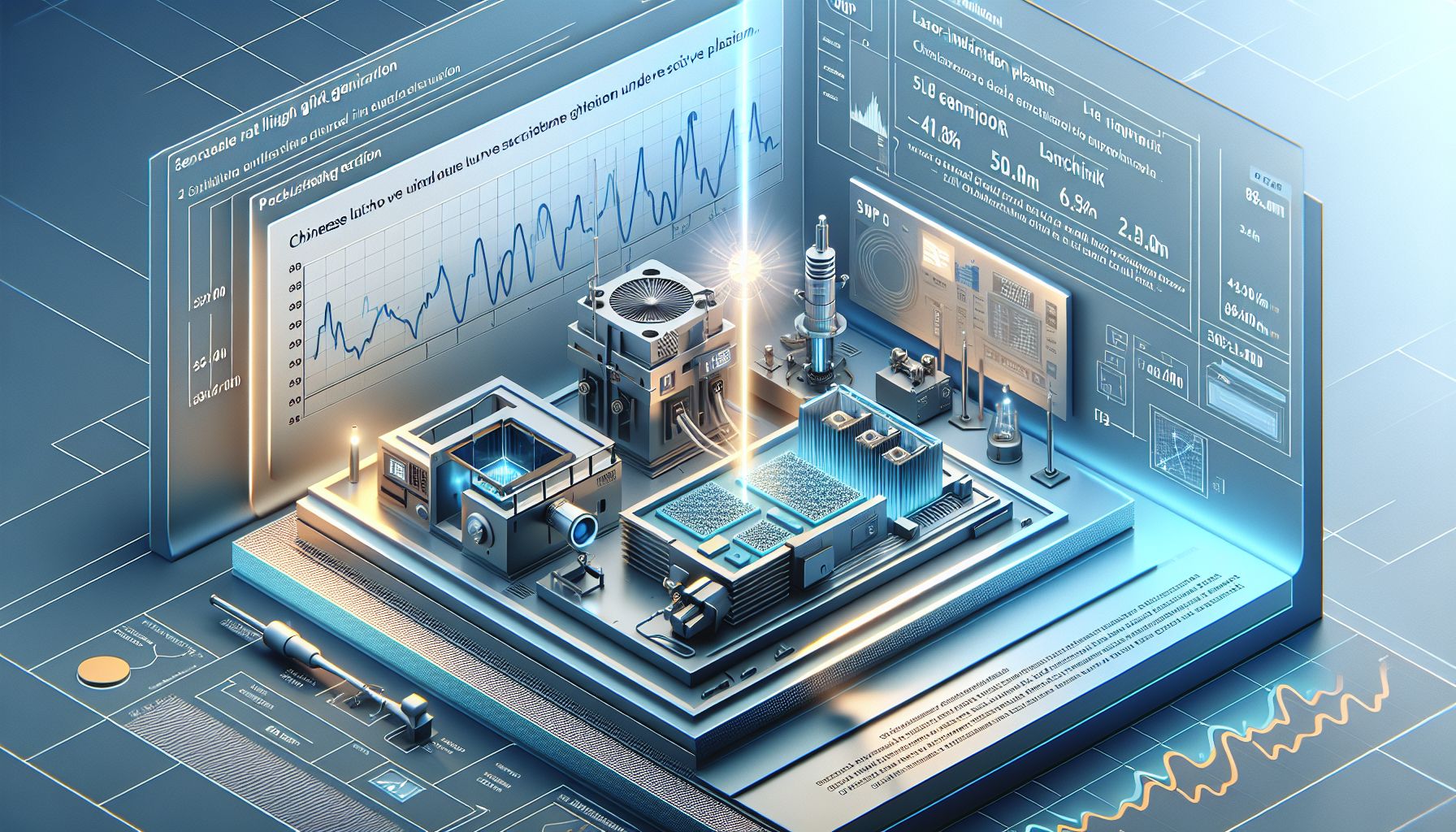
China’s breakthrough in extreme ultraviolet (EUV) lithography could disrupt ASML’s market dominance. Chinese scientists at the Harbin Institute of Technology have developed a novel EUV light generation method using laser-induced discharge plasma. This advancement allows China to potentially bypass U.S. chip sanctions, fostering local production of sensitive semiconductors under 7 nanometers. Major Chinese chip stocks surged with this news, indicating a shift towards self-reliance in the semiconductor sector. This progress in EUV technology is significant as it enables Chinese manufacturers to create advanced AI chips independently of foreign technology. Amid escalating U.S. trade restrictions, China’s progress marks a strategic pivot, potentially altering the global semiconductor landscape. This move not only reduces China’s reliance on ASML but also underscores its determination to innovate and overcome international tech barriers. China’s initiative highlights its resolve to spearhead advancements in high-end chipmaking.
Market impact on ASML
ASML’s position as the sole global manufacturer of EUV lithography equipment [1][5] faces a potential challenge from China’s technological breakthrough. The development of a cost-effective, compact EUV light source by the Harbin Institute of Technology [1][3] could impact ASML’s market dominance, particularly given its current restrictions on selling advanced technology to China under U.S. sanctions [5]. This technological advancement has already influenced market sentiment, with Chinese semiconductor stocks showing significant gains - Semiconductor Manufacturing International Corp jumped 7.4%, while Sunny Optical Technology Group rose 5.4% [7].
Technical innovations
The Chinese approach employs a laser-induced discharge plasma (LDP) method, which differs fundamentally from ASML’s laser-produced plasma (LPP) technology [5]. Professor Zhao Yongpeng’s team at Harbin Institute developed a system that produces extreme ultraviolet light with a 13.5-nanometer wavelength [1][3]. This innovation boasts high energy conversion efficiency and lower technical complexity [3], though challenges remain in optimizing discharge pulse parameters and power output [5].
Strategic implications
China’s progress in EUV technology coincides with heightened U.S. trade restrictions and significant domestic investment in semiconductor independence. The recent establishment of an US$8.2 billion AI investment fund [4] demonstrates China’s commitment to technological self-reliance. This development occurs as the new Trump administration is expected to maintain a hawkish stance on China [2], while Beijing intensifies efforts to incentivize local chip production [2][7].
Bronnen
- www.scmp.com
- www.investing.com
- www.huaweicentral.com
- www.scmp.com
- www.gizmochina.com
- www.econotimes.com