china's semiconductor policy shifts, taiwan fabs win, us chipmakers face tariffs
Beijing, Friday, 11 April 2025.
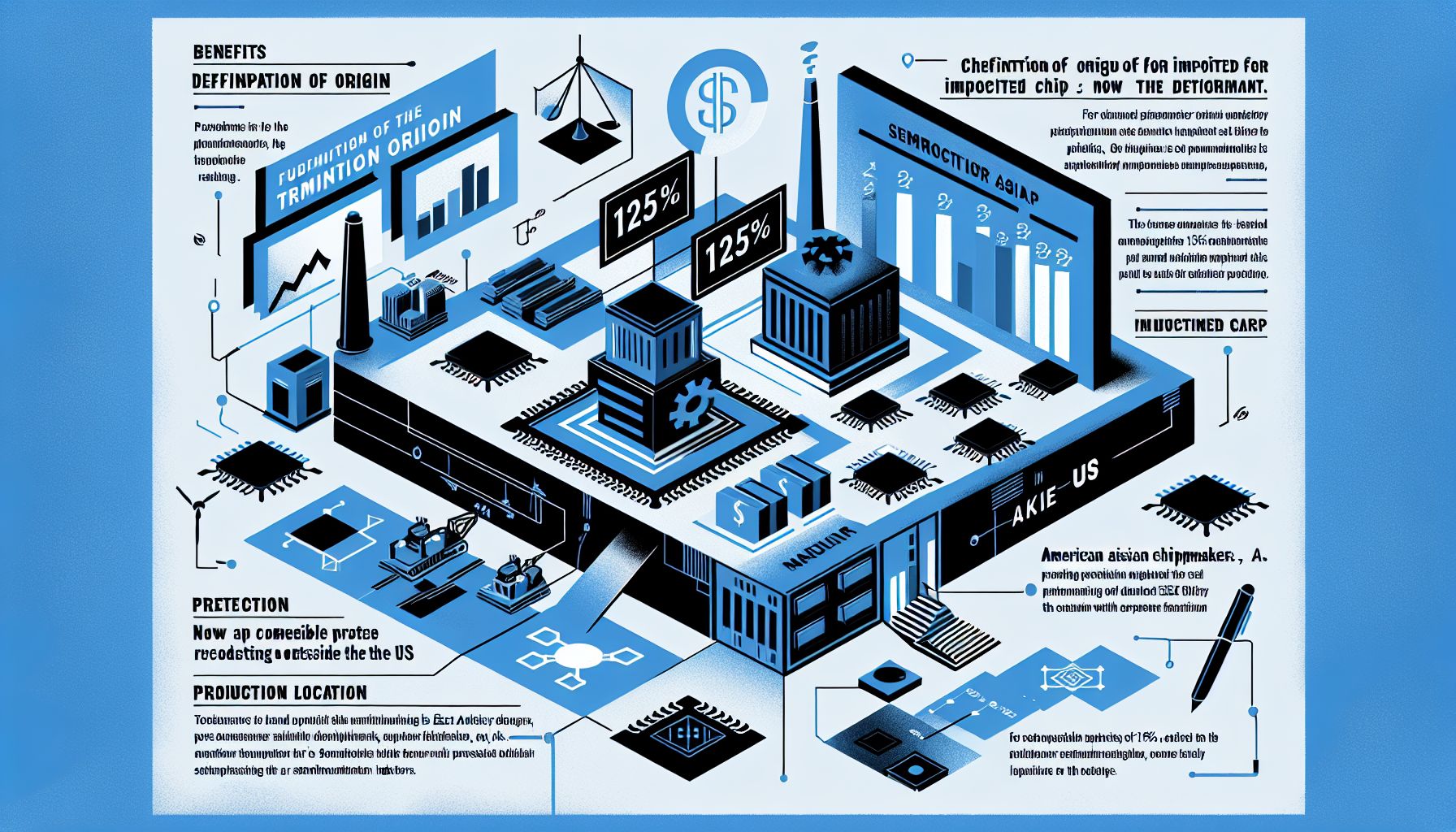
a new ruling by china’s customs authority redefines the origin of imported chips. wafer fabrication location now determines origin. this shift strategically advantages taiwanese manufacturers like tsmc and umc. the change shields them from a 125% tariff. conversely, intel, globalfoundries, and texas instruments may be negatively impacted. analysts predict this could incentivize global foundries to move production outside the us. the policy change occurs amidst ongoing trade tensions. it is seen as a move to bolster china’s domestic semiconductor industry.
market reaction and stock movements
The policy shift triggered immediate market reactions [7]. Shares of smic, listed in hong kong, experienced a 5.9 percent increase, while hua hong’s share price surged by 14 percent [2]. Conversely, several U.S. chip companies saw their stock prices dip in after-hours trading [alert! ‘verify with specific stock data’]. Chip channel vendors reported pausing new orders from U.S. firms to assess the implications [7]. The new regulations have created uncertainty, with one chip customs company lamenting, ‘no one dares to quote prices now; the goods are floating in the sky, and the market may be a different price when they land’ [7].
impact on chipmakers and industry analysis
Analysts suggest that the new rule could eliminate the cost advantage for texas instruments in china [7]. citi analysts estimate that chinese analog chip suppliers hold approximately 6-8% of the global market share [7]. This policy creates opportunities for further localization [7]. Gartner analysts believe that texas instruments and other integrated device manufacturers (idms) focused on analog chips will face significant challenges [6]. However, companies like intel and broadcom, which have diversified their supply chains, may experience a mitigated impact [6].
strategic implications for nvidia, amd, and domestic firms
Nvidia and amd, which rely on tsmc for chip fabrication, are expected to be less affected by these tariffs [5]. Nvidia’s h20 ai chips, produced by tsmc in taiwan, will likely avoid the tariffs [6]. A-share semiconductor companies experienced a surge, with several stocks hitting their daily upper limits [7]. One a-share semiconductor company stated the policy is beneficial for domestic chipmakers as many foreign brands use u.s. wafers [6]. The policy may drive increased demand for domestically produced analog chips, where chinese firms have greater capabilities [7].
us-china trade war context
This customs rule adjustment is the latest development in the ongoing us-china trade war [2][4]. This conflict began in january 2018, with the u.s. imposing tariffs on chinese goods [4]. China has retaliated with its own tariffs [4]. In 2025, the u.s. imposed a 145% tariff on chinese goods, while china levied a 125% tariff on american goods [4]. These measures reflect a broader effort by china to reduce reliance on u.s. technology and promote self-sufficiency in critical sectors like semiconductors [3][5].
Bronnen
- www.tomshardware.com
- www.scmp.com
- www.trendforce.com
- en.wikipedia.org
- finance.sina.com.cn
- www.yicai.com
- stcn.com