chip war: us and china's diverging paths with taiwan's manufacturers
washington, Thursday, 17 April 2025.
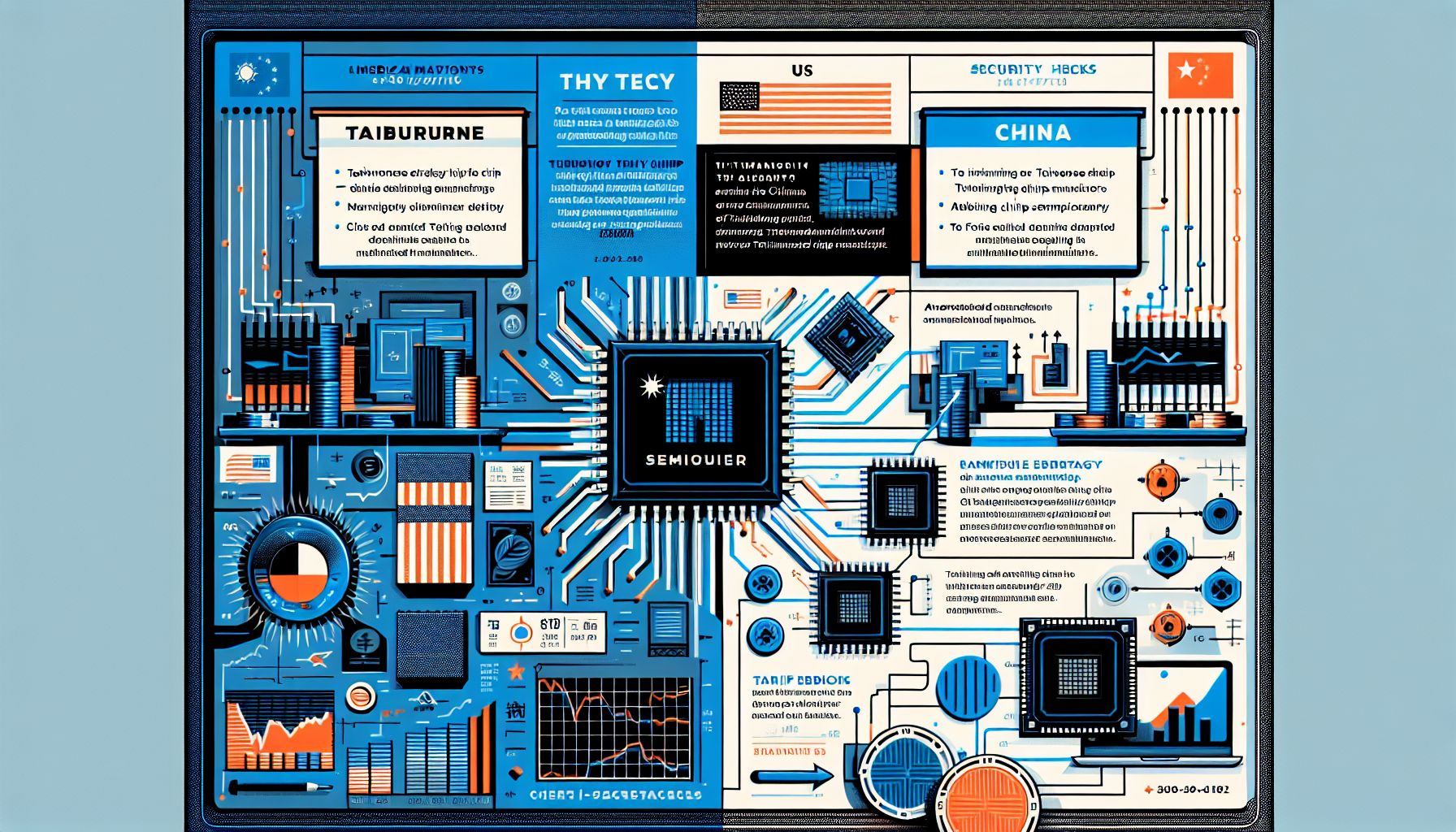
the us and china are approaching taiwanese chip manufacturers with drastically different strategies. the us considers tariffs and security investigations. china is rolling out tariff exemptions for crucial advanced chips. this move highlights china’s reliance on taiwanese semiconductors. it also underscores the complex balancing act between national security concerns and economic needs in the ongoing tech rivalry.
tariff strategies and market impact
The US approach to tariffs and export restrictions is already impacting major players [7]. Nvidia anticipates a $5.5 billion charge due to new restrictions on AI chip exports to China [6][7]. These restrictions require special licenses for selling chips like the H20, initially designed for the Chinese market [6]. News of these restrictions caused Nvidia’s shares to fall by approximately 6% in after-hours trading on Tuesday, April 15 [6]. AMD also expects to book charges of about $800 million related to restrictions imposed on its MI308 GPUs [7].
china’s response and local industry boost
China’s strategy of tariff exemptions for advanced chips aims to ensure access to essential technology, despite trade tensions [1]. This approach may benefit domestic chip manufacturers like SMIC [1]. By avoiding tariffs on chips made in Taiwan but designed by US companies, China can maintain its supply chain [1]. An expert noted that these restrictions may encourage Chinese chipmakers to accelerate production of domestic alternatives, such as Huawei’s Ascend 910B processor, potentially boosting China’s self-sufficiency in semiconductors [7].
taiwan’s position and economic consequences
Taiwanese suppliers are likely to be affected by the escalating trade tensions between the US and China [7]. Analysts suggest that AI server manufacturers, including Inventec Corp. and Mitac Holdings Corp., which supply Chinese cloud service providers, may face challenges [7]. On Wednesday, the Taiex, Taiwan’s stock exchange index, experienced a 1.96% decline, closing at 19,468.00, with the electronics sector particularly hard-hit, falling by 2.27% [7]. These figures reflect investor concerns about the impact of these trade dynamics on Taiwan’s crucial semiconductor industry [7].
complexities in the global chip supply chain
The semiconductor industry involves intricate global supply chains, making tariff implementation complex [1]. Chip manufacturing includes multiple stages across different countries, from design and raw material sourcing to manufacturing, testing, and assembly [1]. This complexity increases the likelihood of tariffs at each border crossing, potentially raising costs for chipmakers and consumer electronics [1]. Lita Shon-Roy of Techcet highlights that the lack of consensus between the US and China could ultimately harm both economies [1].