spiral electrons: a leap for brighter, efficient displays
Beijing, Monday, 17 March 2025.
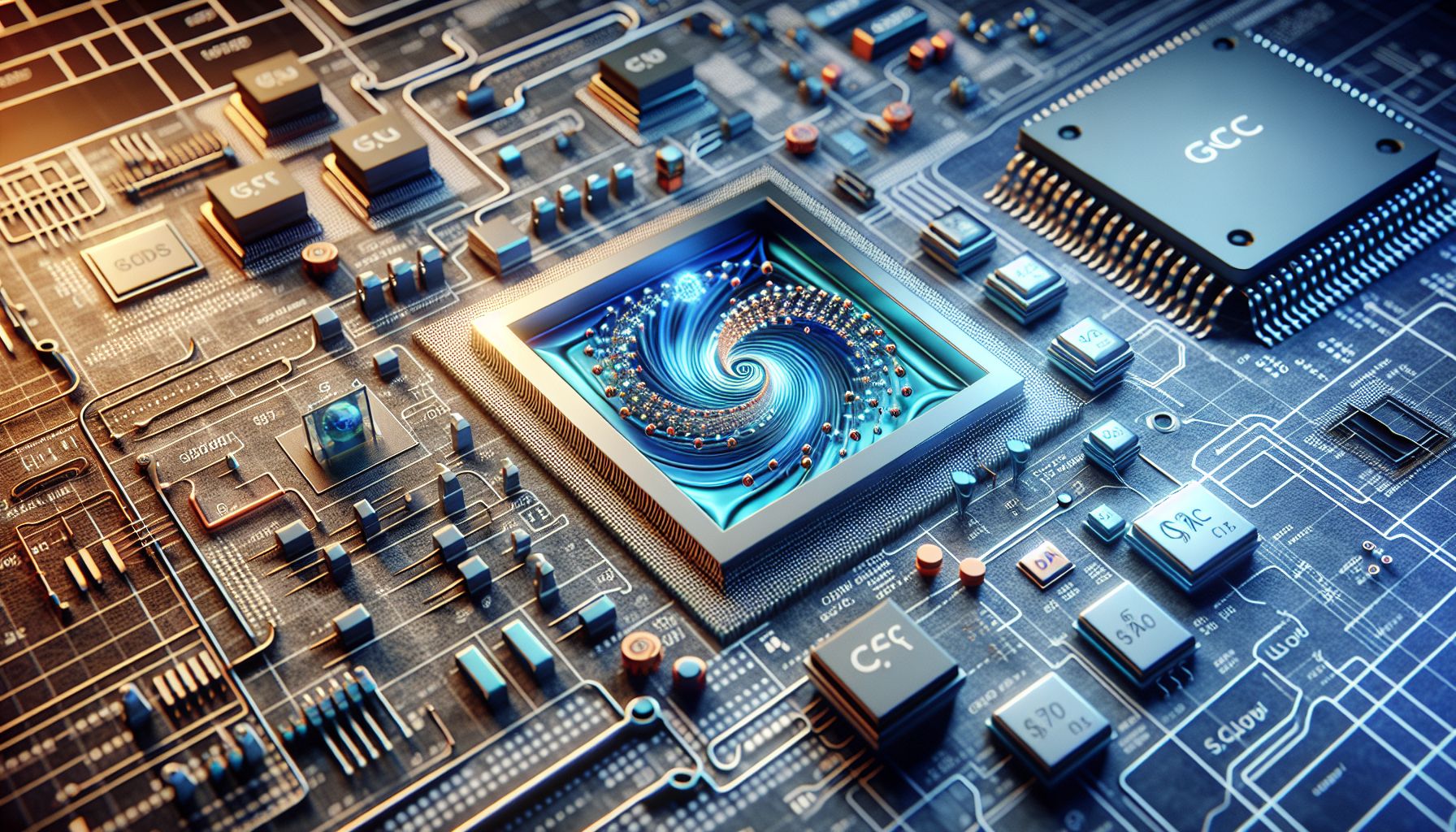
Scientists have engineered a novel chiral organic semiconductor. This material forces electrons to travel in a spiral. This breakthrough promises to boost the efficiency and brightness of OLED displays in smartphones and TVs. Expect to see devices with lower power consumption. This innovation could also unlock advancements in quantum computing. The new semiconductor is based on self-assembling TAT material. Prototypes show record breaking performance.
investment potential in chiral semiconductors
The development of a novel chiral organic semiconductor marks a significant advancement in display technology [1][4][6]. This innovation, achieved by scientists from the University of Cambridge and Eindhoven University of Technology, enables electrons to move in a spiral, thereby enhancing the performance of organic light-emitting diodes (OLEDs) [1][4]. From an investor’s perspective, this breakthrough holds substantial promise for improving displays in devices like TVs and smartphones, potentially leading to increased market demand and higher stock valuations for companies involved in OLED manufacturing [1][6].
enhanced oled performance and energy efficiency
The new semiconductor’s ability to emit circularly polarized light is a game-changer [2]. Current displays waste energy by filtering light, but chiral semiconductors reduce light loss, making screens brighter and more energy-efficient [1]. This directly addresses a key concern for consumers, screen performance and power consumption [1]. Companies that integrate this technology could see increased sales and a positive impact on their stock prices [alert! ‘need data on market response to energy-efficient displays’]. Furthermore, the application extends beyond displays, with potential implications for quantum computing and spintronics, opening new avenues for growth and investment [1][2].
technical details and market impact
The semiconductor is based on a self-assembling triazatruxene (TAT) material, which allows electrons to move in a spiral [1]. When integrated into OLEDs, these devices demonstrated record-breaking efficiency, brightness, and polarization levels [1][2]. This leap in performance could give early adopters a competitive edge, driving stock appreciation [3]. Investors should closely monitor companies exploring this technology, as its successful commercialization could lead to significant returns [5]. The technology is still in the research stage, so it is important to keep an eye on it [1].