korean ai chip merger creates new tech giant
Seoul, Wednesday, 4 December 2024.
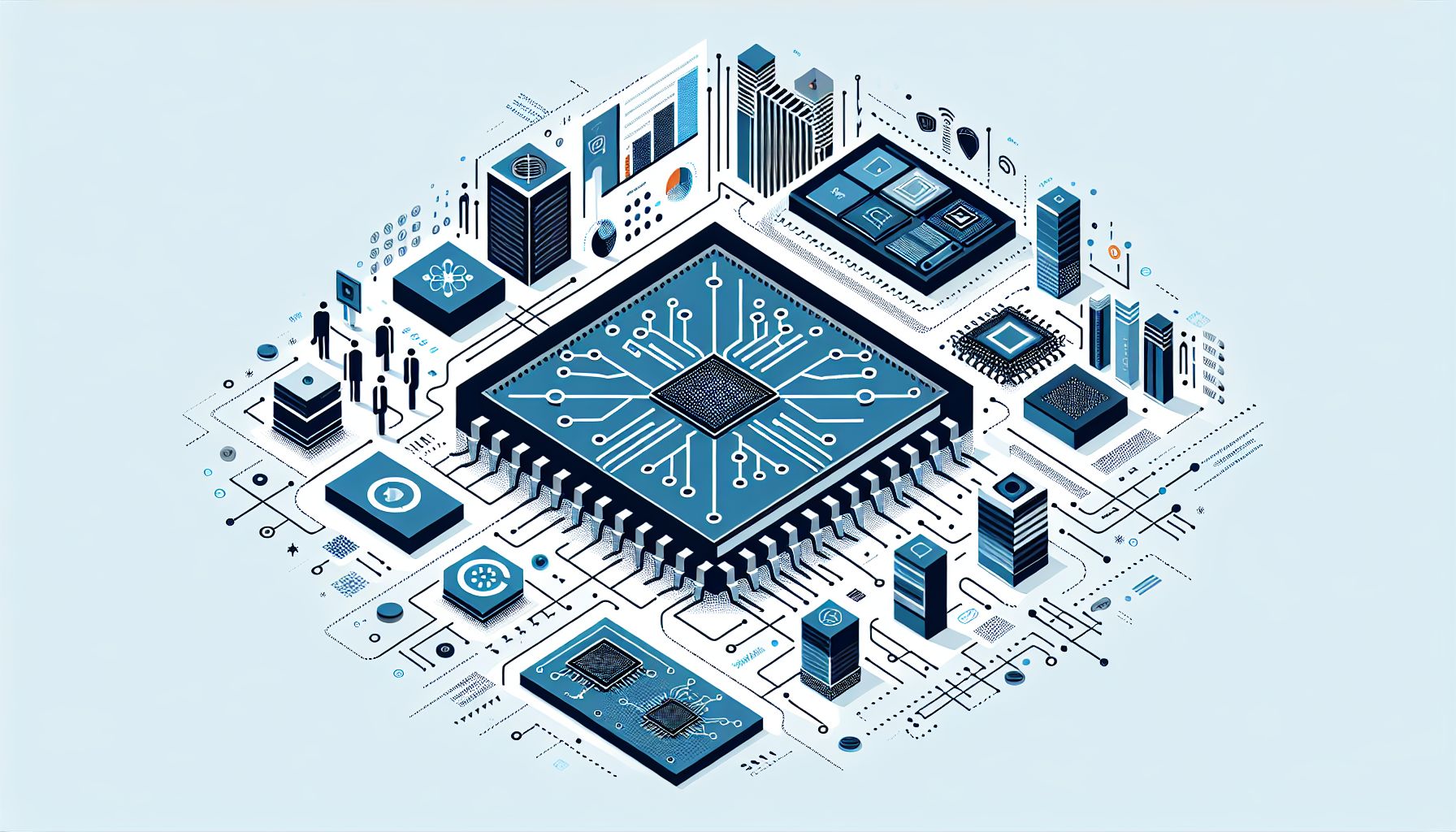
Rebellions and SAPEON Korea have merged to form the first AI chip unicorn in South Korea, marking a significant milestone in the country’s tech industry. This merger, valued at approximately 1.3 trillion won ($935 million), is supported by major stakeholders like SK Telecom and SK hynix. The new entity, retaining the Rebellions name, aims to lead advancements in AI chip technology globally. CEO Sunghyun Park, an MIT Ph.D. graduate, continues to lead the company, targeting international markets such as the United States, Saudi Arabia, and Japan. Rebellions is focusing on developing its next-generation AI chip, REBEL, which features innovative chiplet technology and advanced memory capabilities. The merger positions Rebellions as a formidable competitor in the rapidly evolving AI semiconductor sector, leveraging strategic partnerships and cutting-edge technology to redefine Korea’s role in the global AI landscape.
strategic market positioning
The merger comes at a crucial time in the global AI chip market, where NVIDIA currently holds dominant position[7]. The combined expertise of Korea’s telecom, government, and semiconductor sectors positions Rebellions to compete more effectively in this space[4]. The company’s strategic focus on AI data centers, in partnership with SK Telecom, demonstrates its ambition to capture a significant share of this rapidly growing market segment[1].
technological advancement
Rebellions’ upcoming REBEL chip represents a significant technological leap. The chip features a scalable chiplet architecture integrated with 144GB HBM3e memory, specifically designed for large language models and multi-modal AI applications[1]. The company is also collaborating with industry leaders like Arm and Samsung Electronics to develop an AI CPU chiplet platform using Samsung’s advanced 2-nanometer process technology[7].
investor implications
With a valuation of 1.3 trillion won, Rebellions has attracted significant investor attention[4]. While SK Group affiliates became the largest shareholders post-merger, operational control remains with CEO Park and the original management team[7]. The company has secured backing from diverse international investors, including Saudi Aramco’s Wa’ed Ventures, Korea Telecom, and Pavilion Capital[1].
integration roadmap
The merger, finalized on December 3, 2024, follows six months of strategic planning[1]. Rebellions has outlined a three-month post-merger integration plan to consolidate resources, workforce, and partnerships[7]. This integration phase is crucial for maintaining operational efficiency and leveraging the combined strengths of both companies to compete effectively in the global market.
Bronnen
- semiconductorsinsight.com
- chiplet-marketplace.com
- twitter.com
- koreajoongangdaily.joins.com
- www.msn.com
- pulse.mk.co.kr
- [](GPT: Information synthesized from provided sources)