new export controls shake semiconductor industry
Hsinchu, Taiwan, Friday, 24 January 2025.
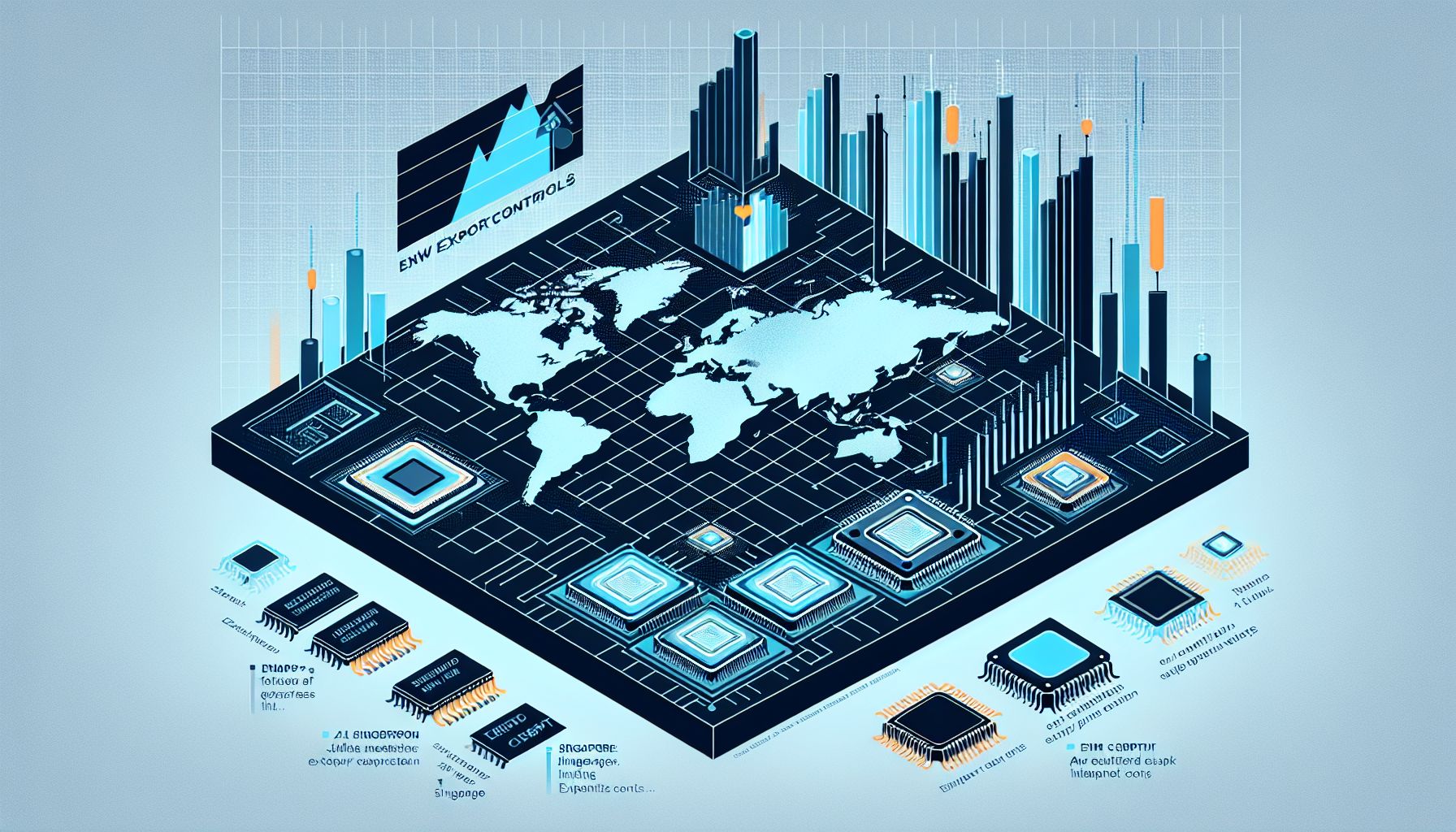
The semiconductor industry faces challenges due to new U.S. export controls announced on January 24, 2025. These controls, targeting AI technologies, restrict many countries and significantly impact the global tech landscape. This regulatory shift affects major players like Nvidia, whose shares fell after the announcement. The controls limit countries with restrictions to a total of 790 million total processing power through 2027, sparking concerns across sectors. While 18 countries are exempt, 120 nations including Singapore and Israel face new caps. With potential additional constraints from the incoming Trump administration, the industry braces for more stringent regulations. Meanwhile, China’s retaliatory measures, involving restrictions on materials essential for semiconductor production, escalate the ongoing trade tensions. Stakeholders in the tech industry must navigate these complex shifts to maintain competitive advantage.
Market impact and power restrictions
The latest U.S. export controls on AI technologies sent shockwaves through the semiconductor market [1]. The regulations limit 120 countries to 790 million total processing power (TPP) through 2027 [1]. Only eighteen nations, including Japan, Britain, South Korea, and the Netherlands, received exemptions from these restrictions [1]. Nvidia’s shares dropped following the announcement, with the company describing the measures as a ‘sweeping overreach’ [1].
China’s retaliatory measures
China responded swiftly by implementing export restrictions on critical semiconductor materials [1]. The ban affects crucial elements like gallium, germanium, and antimony [1]. China’s dominance in antimony production, accounting for 48% of global mined output, has led to a 40 percent price surge [1]. Mining strategist Christopher Ecclestone notes that military applications now significantly influence the antimony market [1].
Data center strain and industry response
The growing AI infrastructure demands are creating unprecedented pressure on data centers [1]. Industry leaders express concerns about power and space constraints. Samsung Semiconductor VP Indong Kim emphasizes that AI infrastructure requires extreme efficiency with scale-out capability [1]. The situation has prompted major investments, including Microsoft’s $80 billion commitment to enhance AI workload capabilities [1].
Supply chain implications
The semiconductor supply chain faces mounting pressure as manufacturers adapt to new restrictions [1]. Companies like TSMC and SK Hynix have seen significant stock growth, with TSMC gaining almost 5% and SK Hynix nearly 10% following positive industry reports [1]. The U.S. Department of Commerce’s implementation of restrictions on semiconductor-making equipment aims to inhibit China’s AI development for military use [1].