chipocalypse now? trump's tariff threat looms over tsmc
Washington, Monday, 5 May 2025.
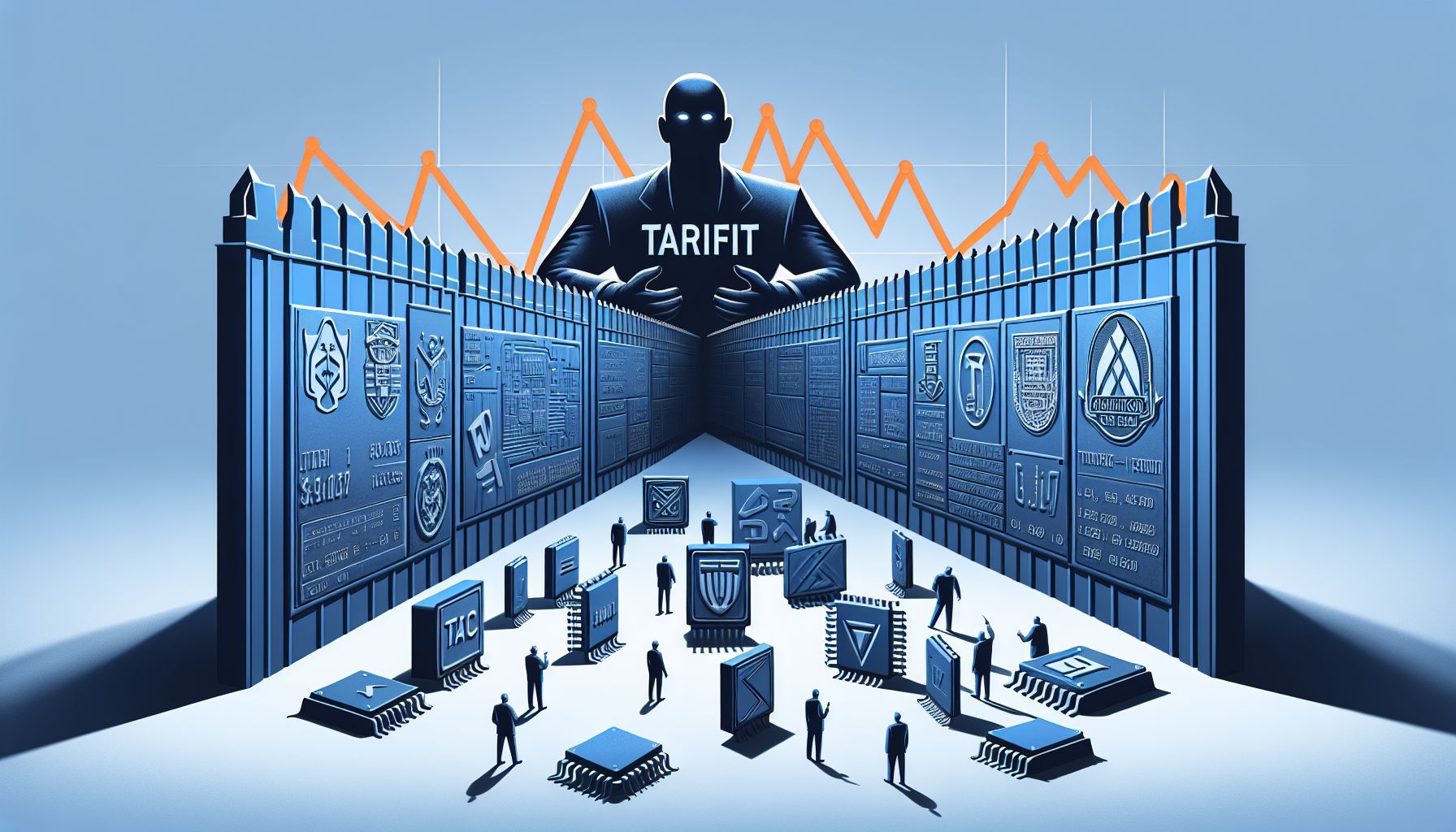
the u.s. administration is considering aggressive chip tariffs. tsmc and other semiconductor manufacturers could be affected. president trump has suggested tariffs as high as 100% on taiwan. he accuses the nation of stealing u.s. tech. the commerce department has seen little opposition to the tariffs. this gives trump leverage. the tariffs could reshape the semiconductor landscape. intel and tsmc could benefit from increased domestic production. tsmc is investing over $100 billion in the u.s., possibly to avoid these tariffs.
tariff impact on tsmc
The proposed tariffs could have significant implications for TSMC (TSM:NYSE). A potential 100% tariff on Taiwanese chips could drastically increase costs for U.S. companies relying on TSMC’s manufacturing [1]. This could force companies to seek alternative suppliers or relocate production, disrupting established supply chains. The tariffs are expected to be announced by Wednesday [1]. The U.S. Commerce Department is evaluating increasing domestic chip production to meet market demand, suggesting the tariff implementation will coincide with announcements supporting the U.S. chip industry [1].
domestic benefits and tsmc’s response
Intel and TSMC could potentially benefit from the push for domestic chip production [1]. TSMC has already committed to investments exceeding $100 billion in the U.S., possibly as a strategy to mitigate the impact of the impending tariffs [1]. These investments signal a move to diversify production and reduce reliance on manufacturing in Taiwan. This could stabilize TSMC’s position in the face of potential trade barriers. The tariffs are designed to encourage companies like TSMC to shift production to the United States [4].
market reactions and expert opinions
The market is closely watching how TSMC will navigate these changes. Some industry professionals suggest that Taiwanese semiconductor companies may shift increased costs to customers [2]. They might also seek alternative suppliers and explore domestic production options in China [2]. This could lead to a restructuring of the global semiconductor supply chain. The tariffs are seen as a way to force companies to bring production into the U.S. [1].
geopolitical considerations
Geopolitical tensions between the U.S. and China add another layer of complexity. Concerns exist regarding the stability of wafer output if tariffs are imposed, potentially affecting supply and pricing [2]. These tariffs could impact the competitiveness of the semiconductor industry and the global economy [2]. Some analysts believe that tariffs benefit no one [7]. The tariffs are seen as a protectionist measure by the U.S. government [1].
Bronnen
- wccftech.com
- finance.stockstar.com
- www.cnbeta.com.tw
- m.cnbeta.com.tw
- www.oror.vip
- www.ctee.com.tw
- www.c114.net.cn